Why Cork Oak Trees Are Never Cut Down
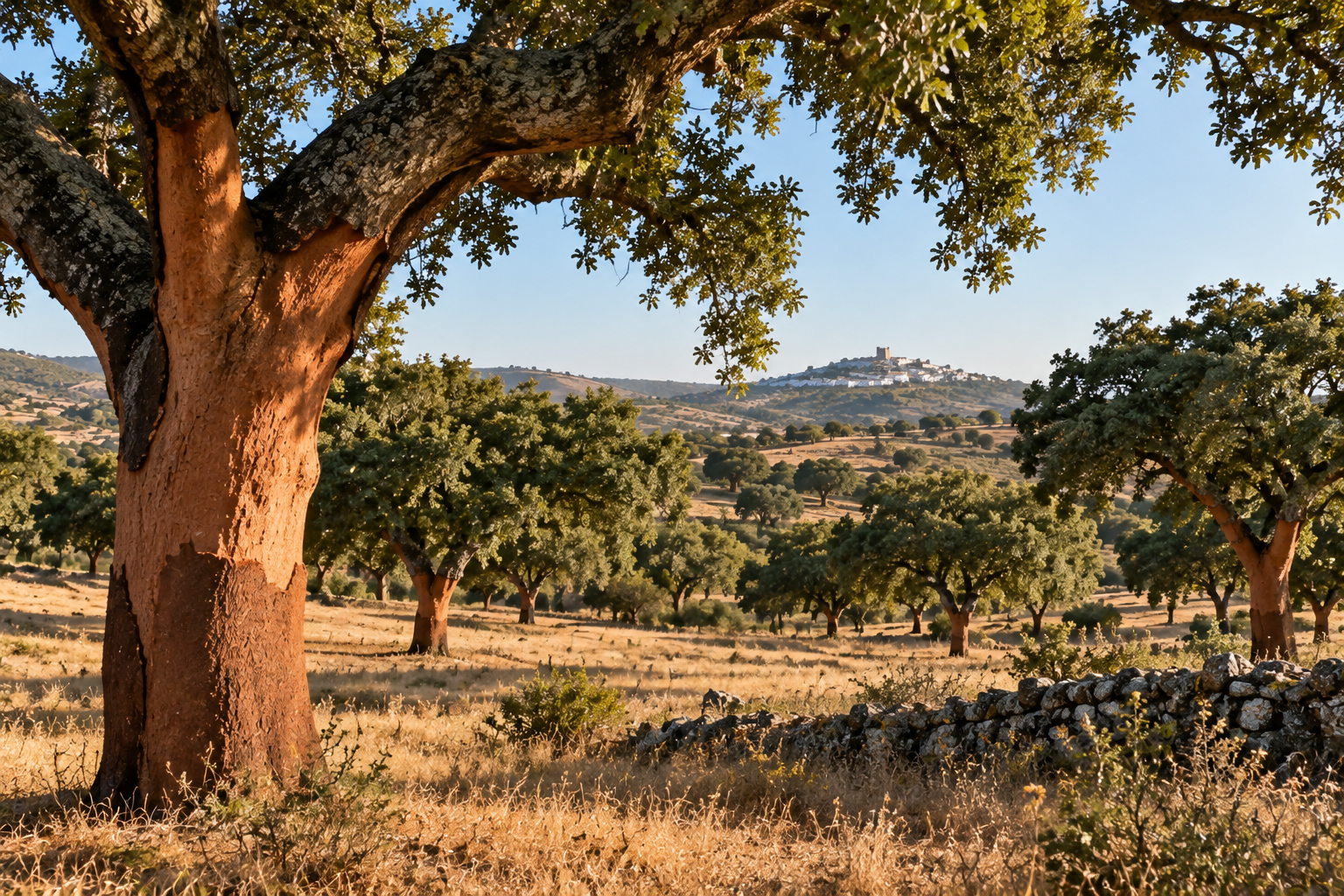
Drive through the Alentejo and you’ll see them everywhere: ancient cork oaks standing across the landscape, their broad canopies casting shadows over the dry golden earth. Look closely and many have a number painted onto their trunks. It marks the year their cork was last harvested.
What makes the cork oak remarkable is that the tree does not need to be cut down to produce cork. Instead, skilled workers carefully remove its thick outer bark by hand, usually during the warmer months when it separates more easily from the trunk. The tree is then left to regenerate its bark for around nine years before it can be harvested again.
It is a relationship built on patience. A cork oak can live for well over a century, producing harvest after harvest during its lifetime, and Portugal protects the species so strongly that cork oaks cannot simply be felled at will. The forests themselves — known as montados — are also extraordinary ecosystems, supporting wildlife, livestock and generations of rural communities.
Perhaps that is why the cork oak feels so Portuguese. Nothing is rushed. The tree gives something valuable, people take only what it can replace, and then everyone waits. Nine years later, they meet again.
A Harvest That Begins by Hand
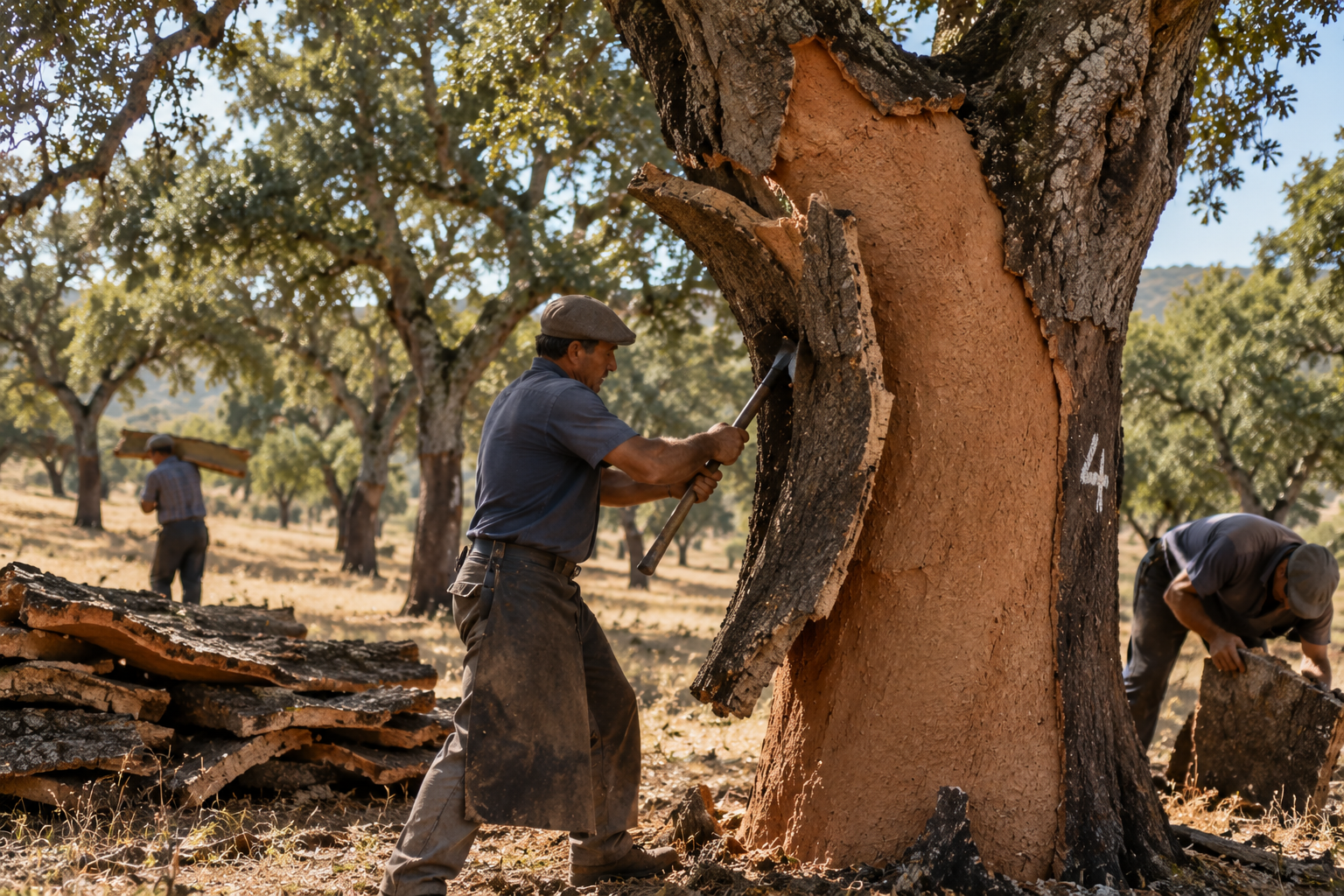
Cork harvesting remains an extraordinarily skilled process. During the summer, experienced workers known as tiradores use small axes to make precise cuts in the bark. They must remove the cork without damaging the living layer underneath — something that takes considerable knowledge and experience.
Large sections of bark are gently levered away from the trunk, sometimes coming away in surprisingly substantial pieces. Beneath them, the newly exposed trunk has a warm reddish colour, making recently harvested cork oaks easy to spot as you travel through the countryside.
The work may look simple from a distance, but it is anything but. Every tree is different, and the person harvesting it must understand exactly where and how deeply to cut. Once harvested, the cork begins growing again. And the waiting starts.
Why Nine Years?
Portuguese cork production operates on an unusually long timescale. After a cork oak has been harvested, it must be given time to completely regenerate its protective bark. In Portugal, the minimum interval between harvests is generally nine years.
That little painted number you sometimes see on the trunk helps identify the year of the most recent harvest. Rather wonderfully, the number usually represents the final digit of the year, creating a simple visual calendar across the landscape. But even the first harvest is a long time coming.
A young cork oak must grow for decades before its bark can first be removed. That initial cork is rough and irregular and isn't the material used to make the finest wine stoppers. It takes subsequent harvests before the tree produces cork of the quality required for traditional bottle corks. In other words, someone planting a cork oak today is making an investment that may benefit another generation more than their own.
The Landscape Behind the Cork
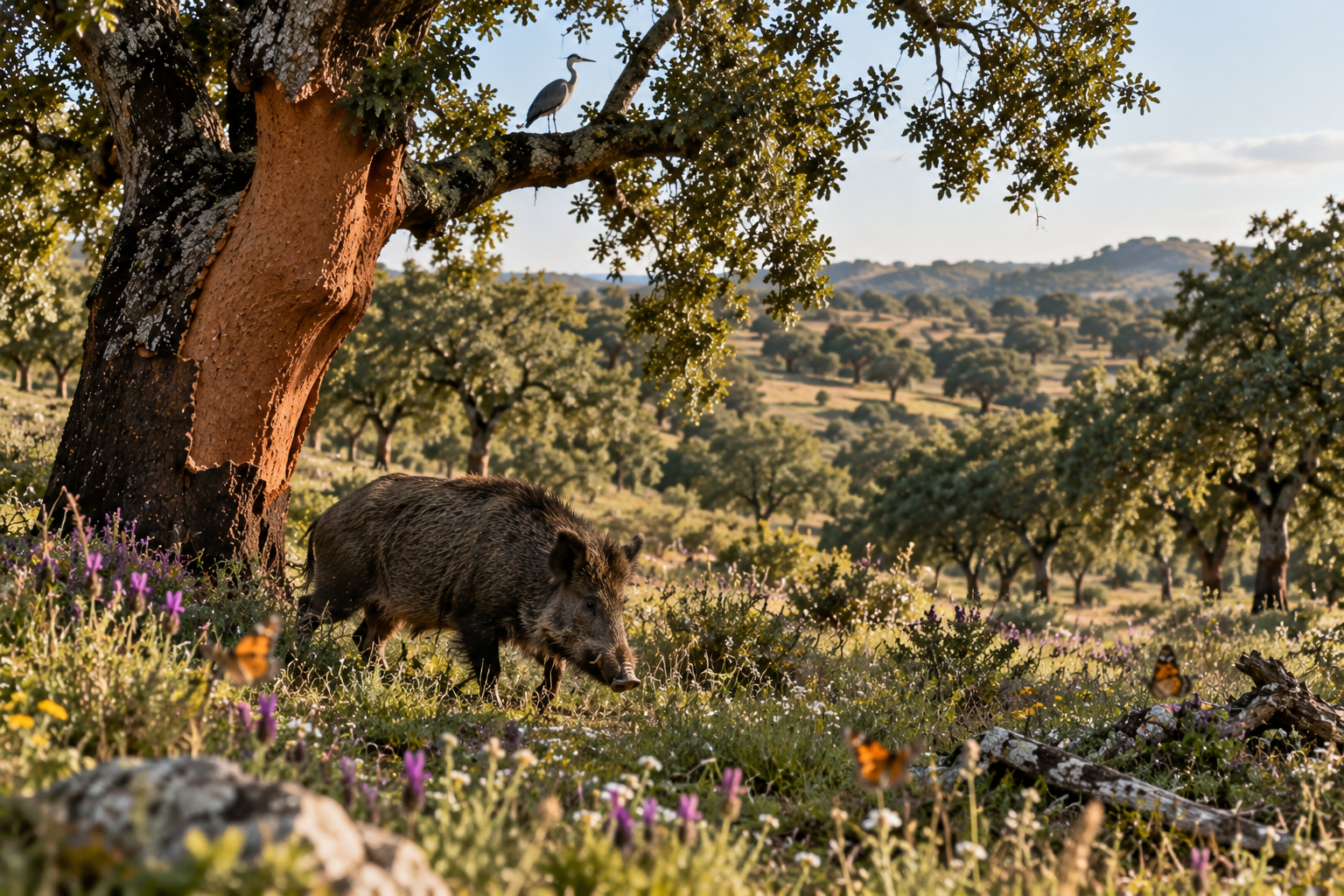
The cork oak is about much more than wine bottles. Across southern Portugal, particularly in the Alentejo, cork oaks form part of the montado: a distinctive landscape of widely spaced trees, grasses and pasture.
At first glance it can look almost untouched, but the montado is actually a carefully managed landscape where agriculture, forestry and livestock have existed alongside one another for generations.
Sheep and cattle graze beneath the trees. Acorns provide food for animals. Wildflowers and plants grow between them, while the tree canopy creates shade in a region where summer temperatures can be fierce. These landscapes also provide habitat for a remarkable variety of wildlife. And because the trees remain standing after their cork is harvested, producing cork does not require the destruction of the forest that produced it.
From an Alentejo Tree to a Bottle of Wine
Once removed from the tree, the cork bark begins another journey. The large curved pieces are stacked and seasoned before being processed. They are then boiled, cleaned and graded according to their quality and eventual use.
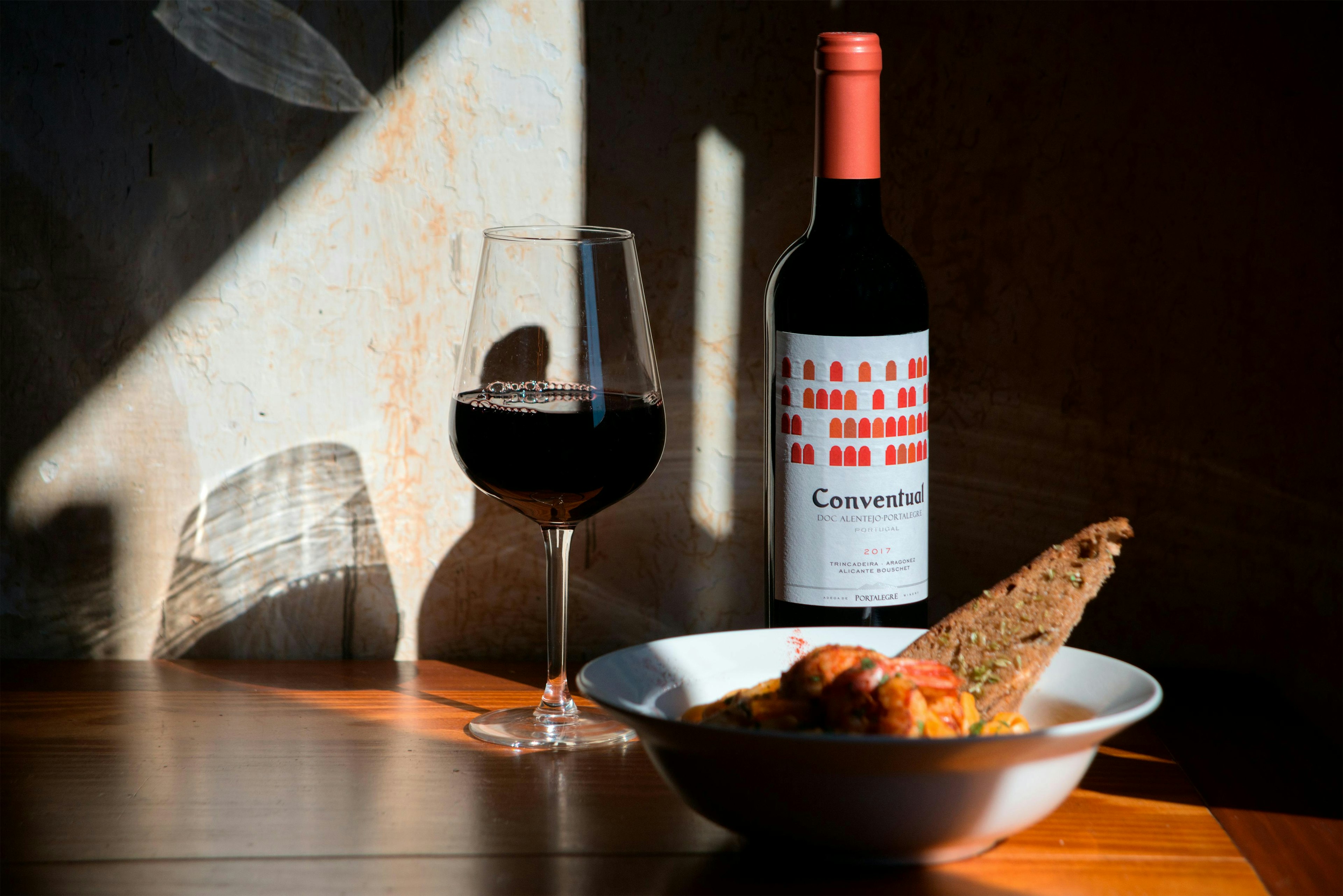
The best cork has one particularly famous destination: the wine bottle. Portugal's relationship with wine and cork therefore fits together rather beautifully. The vineyards of the Douro, Alentejo and other wine regions produce the wine, while Portugal's cork forests provide one of the world's most recognisable ways of sealing it.
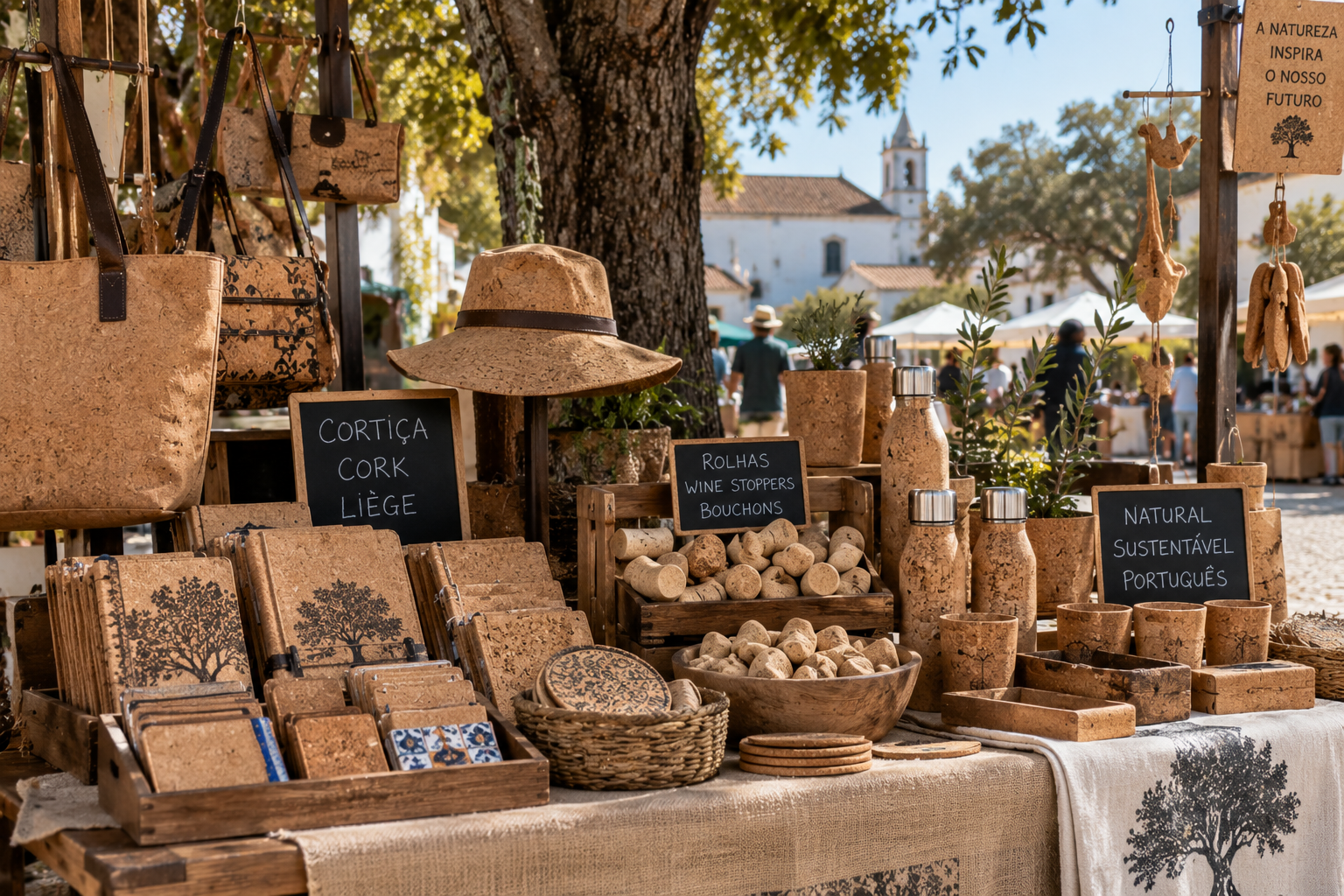
But cork is remarkably versatile. Today you'll find Portuguese cork in everything from flooring and furniture to handbags, shoes, insulation and contemporary design. Even pieces unsuitable for traditional wine stoppers can be granulated and transformed into other products, allowing much of the harvested material to be used.
A Tree Protected by Portugal
There is another reason you continue to see these old trees standing across the countryside: Portugal takes their protection extremely seriously. Cork oaks are protected by law, and landowners cannot simply decide to cut down a healthy tree because it happens to be inconveniently positioned. That protection makes sense when you understand the timescale involved.
Next time you're travelling through the Alentejo, take a closer look at the cork oaks beside the road. Some will have dark, deeply textured bark. Others will have smooth reddish trunks showing that their cork has been removed relatively recently. And on many, you'll spot that painted number.
Once you know what it means, the landscape looks slightly different. You begin to realise that what appears to be a quiet collection of old trees is actually operating according to an extraordinarily slow rhythm. Different trees are at different stages of their nine-year cycle, each waiting for its turn to be harvested again.
And perhaps that is one of the loveliest things about travelling through Portugal. Sometimes the things you pass without a second glance have been shaped by traditions stretching back generations. A number painted on a tree turns out to tell a story about craftsmanship, patience, conservation and an industry that depends upon keeping the tree alive.
A little piece of Portugal, hiding in plain sight.