


In Portugal, Christmas is a celebration of faith, family and traditions passed down through generations. Among the most cherished is the presépio, the Nativity scene — a miniature world of craftsmanship, devotion and storytelling that captures the enduring spirit of a Portuguese Christmas.
There is a particular charm to Portugal at Christmas. Church bells ring across historic towns, the scent of cinnamon and freshly baked pastries drifts from neighbourhood bakeries, and streets glow beneath festive illuminations. Behind the celebrations, however, lies a quieter, more intimate tradition that has occupied a special place in Portuguese homes for centuries.
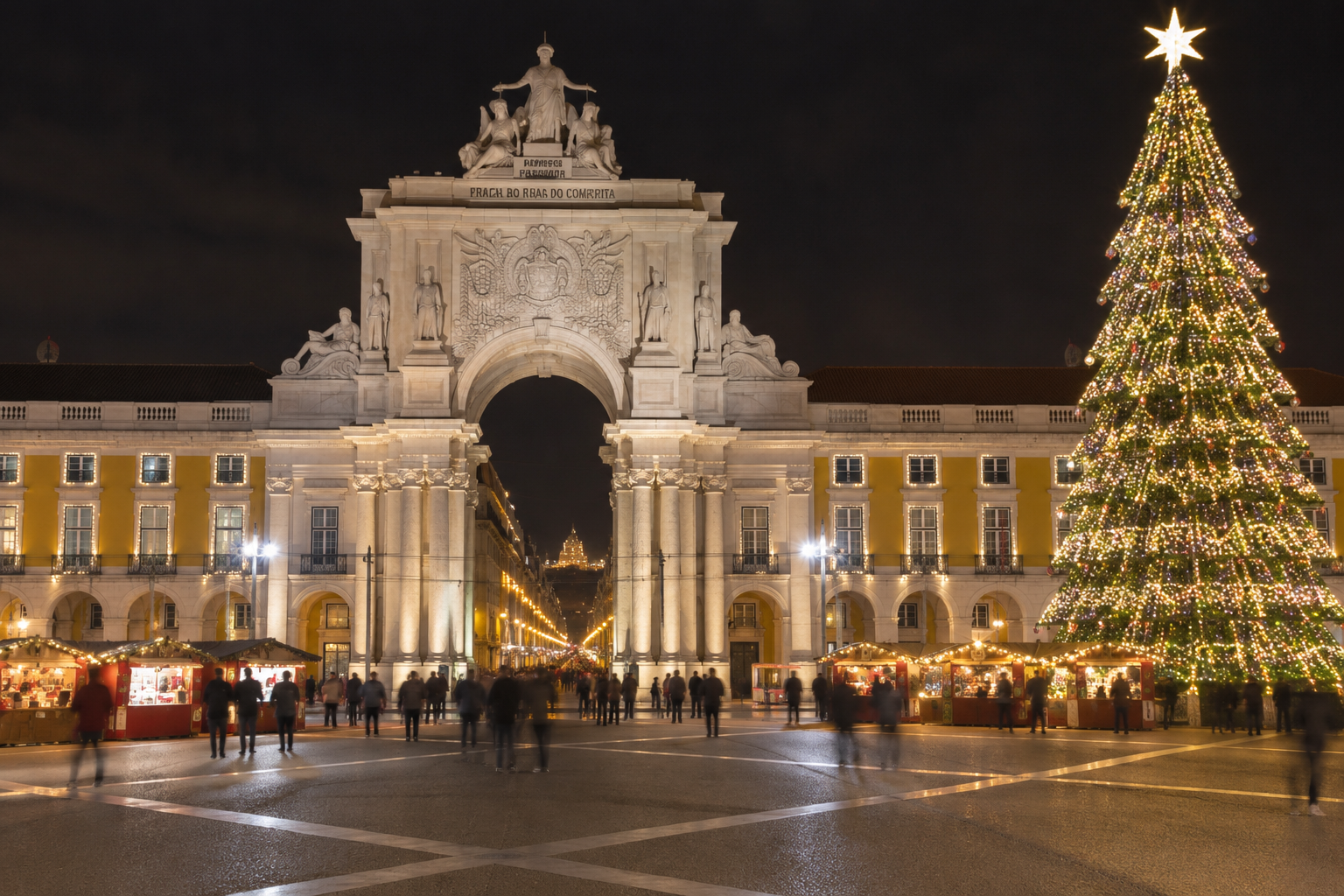
The presépio, or Nativity scene, is far more than a seasonal decoration. It is a beautiful expression of the country's Catholic heritage, a celebration of traditional craftsmanship and, for many families, one of the most meaningful rituals of Christmas. From modest arrangements beneath the family Christmas tree to elaborate displays filling entire rooms, the Portuguese presépio tells a story that is both familiar and wonderfully individual.
A Christmas Tradition Rooted in Faith
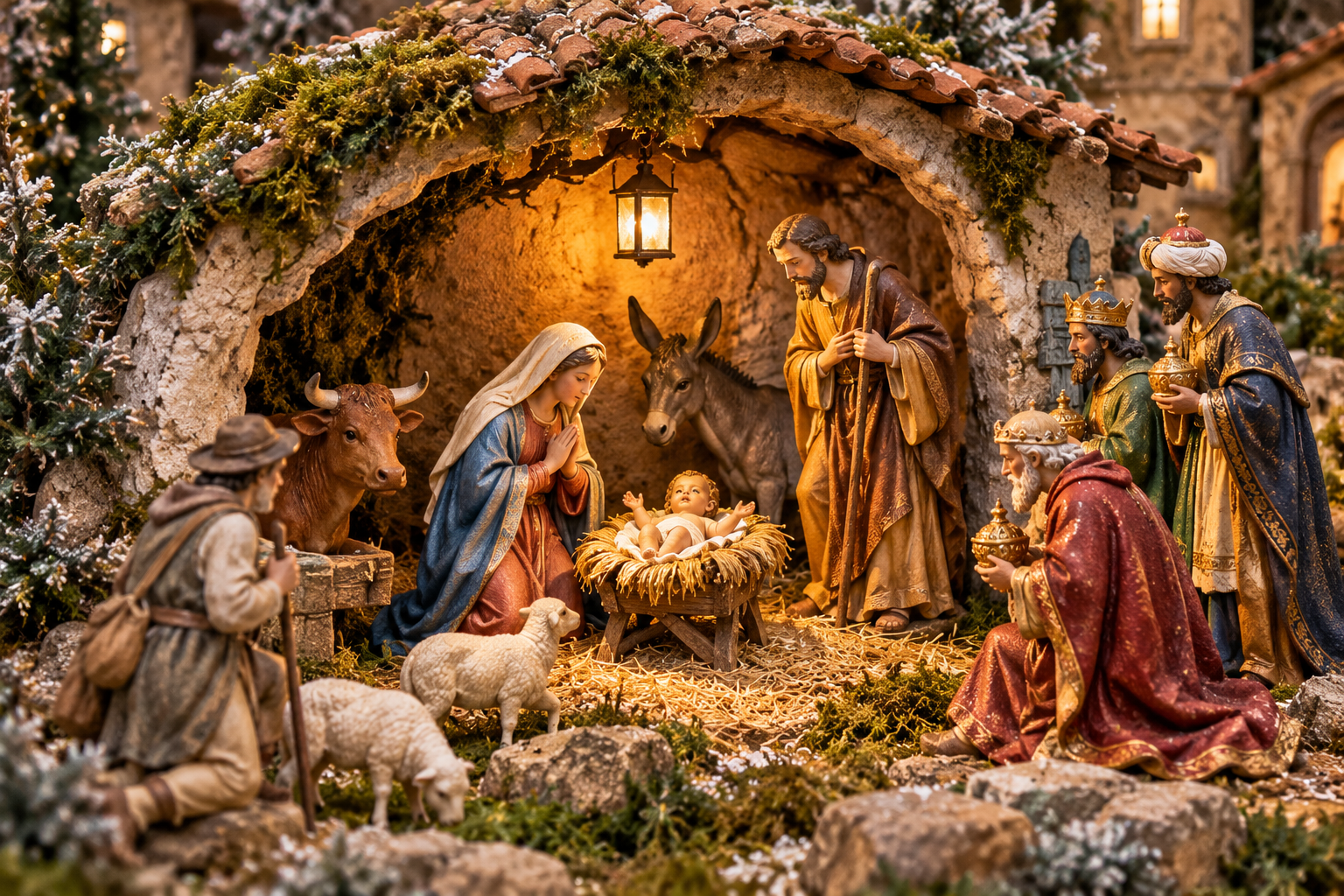
At the heart of every presépio is the Nativity: Mary and Joseph gathered around the infant Jesus, accompanied by the shepherds, animals and, often, the Three Wise Men. The tradition of recreating the birth of Christ is commonly traced to Saint Francis of Assisi, who staged a living Nativity scene in Greccio, Italy, in 1223. Over the following centuries, the custom spread throughout Catholic Europe, eventually becoming deeply embedded in Portuguese Christmas celebrations.
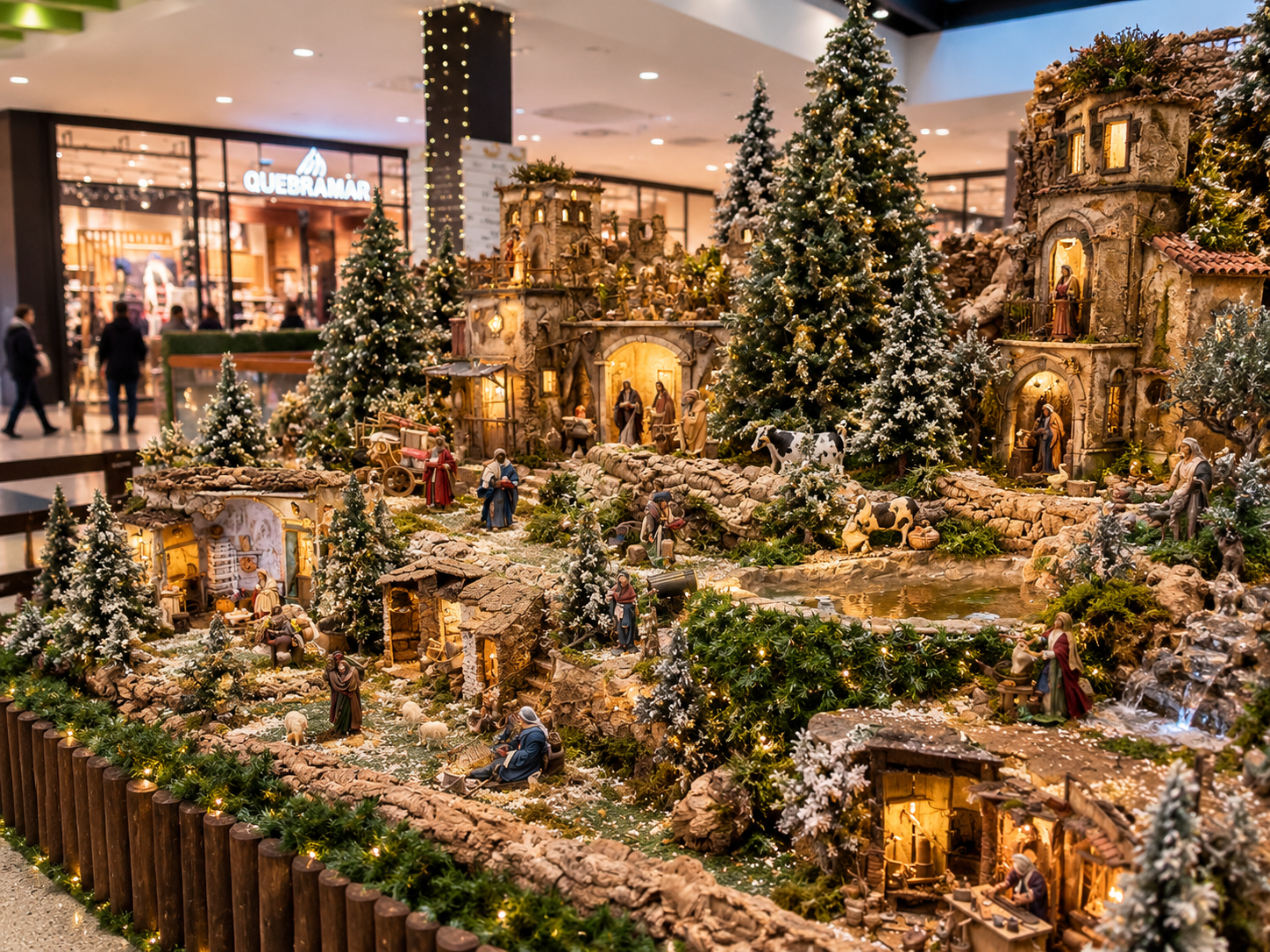
In Portugal, the tradition developed a character of its own. While the Holy Family remains the spiritual centre of the scene, Portuguese presépios often extend far beyond the stable in Bethlehem. Small villages appear among moss-covered hills, with miniature houses, bridges, wells and winding paths. Shepherds tend their flocks, farmers work in the fields, women carry baskets to market and fishermen cast their nets. The result is an enchanting miniature world in which biblical history and everyday Portuguese life meet.
These scenes reflect something particularly touching about the tradition: the belief that the story of Christmas belongs not only to a distant time and place, but also to the communities and families who continue to celebrate it.
The Art of the Portuguese Presépio
Portugal's Nativity scenes are as much works of art as expressions of faith. During the 18th century, the presépio became an important form of religious art, particularly through the work of sculptors who created elaborate compositions for churches, convents and wealthy patrons. Among the most celebrated was Joaquim Machado de Castro, whose remarkable terracotta Nativity scenes helped establish a distinctive Portuguese artistic tradition.
His work can still be admired in Lisbon, most notably at the Basilica da Estrela, where an extraordinary 18th-century presépio brings the Nativity to life through an intricate collection of figures and architectural details. Unlike the simpler arrangements familiar in many other countries, these grand Portuguese compositions could include hundreds of characters, depicting not only the Holy Family but also scenes of rural life, tradespeople, musicians and animals.
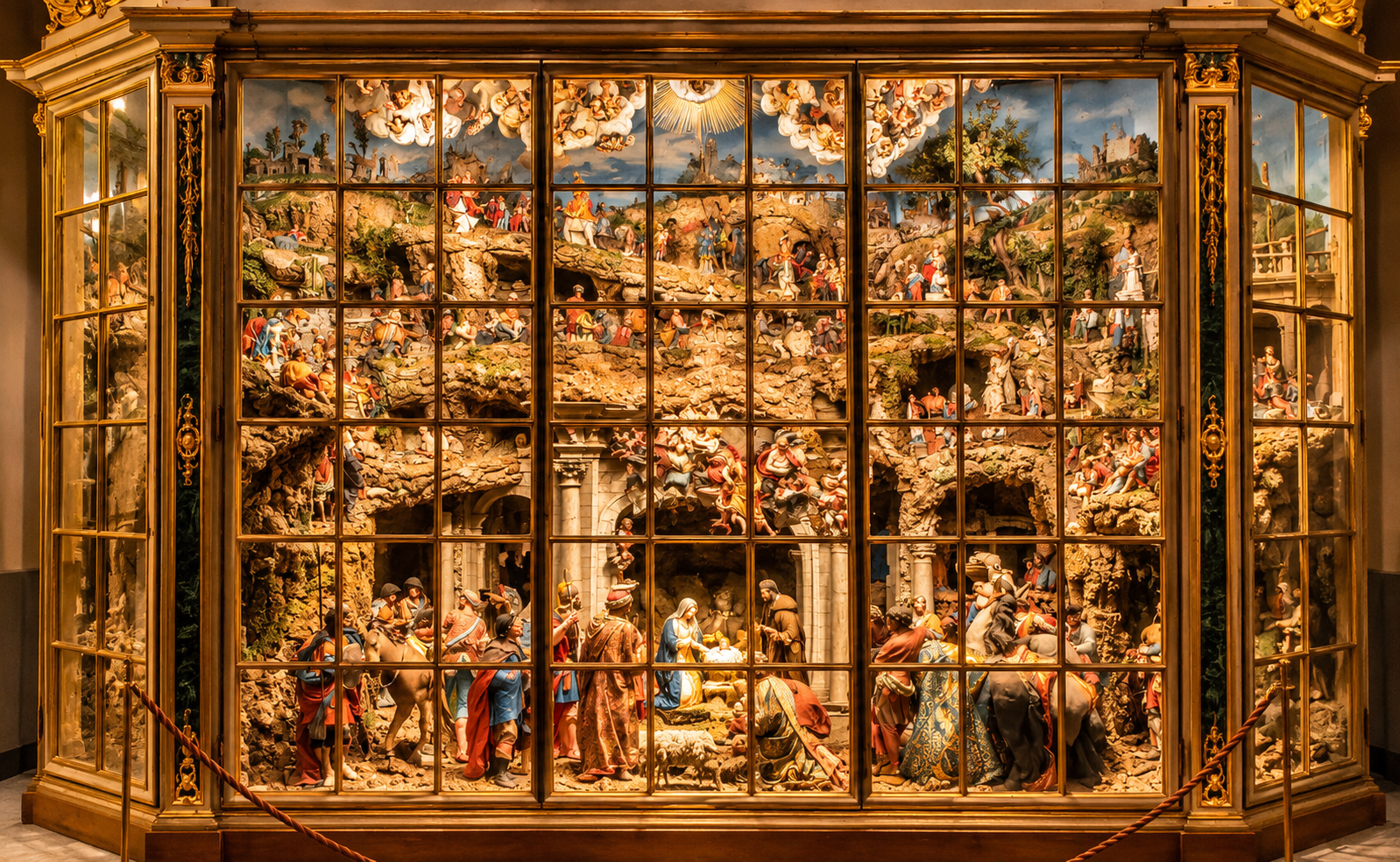
There is something almost theatrical about them. Every figure has a role to play, every gesture suggests a story, and the viewer is invited to linger over the smallest details. Today, Portugal's artisans continue this tradition, creating figures from clay, wood and other materials, often using techniques passed down through generations.
A Miniature Portrait of Portuguese Life
One of the most delightful aspects of a traditional Portuguese presépio is its attention to the ordinary. Alongside the shepherds and angels, visitors might discover a baker carrying bread, a woman collecting water from a fountain, a farmer leading a donkey or a fisherman returning with his catch. These figures transform the Nativity into a portrait of Portuguese village life, celebrating the occupations, customs and communities that have shaped the country for centuries.
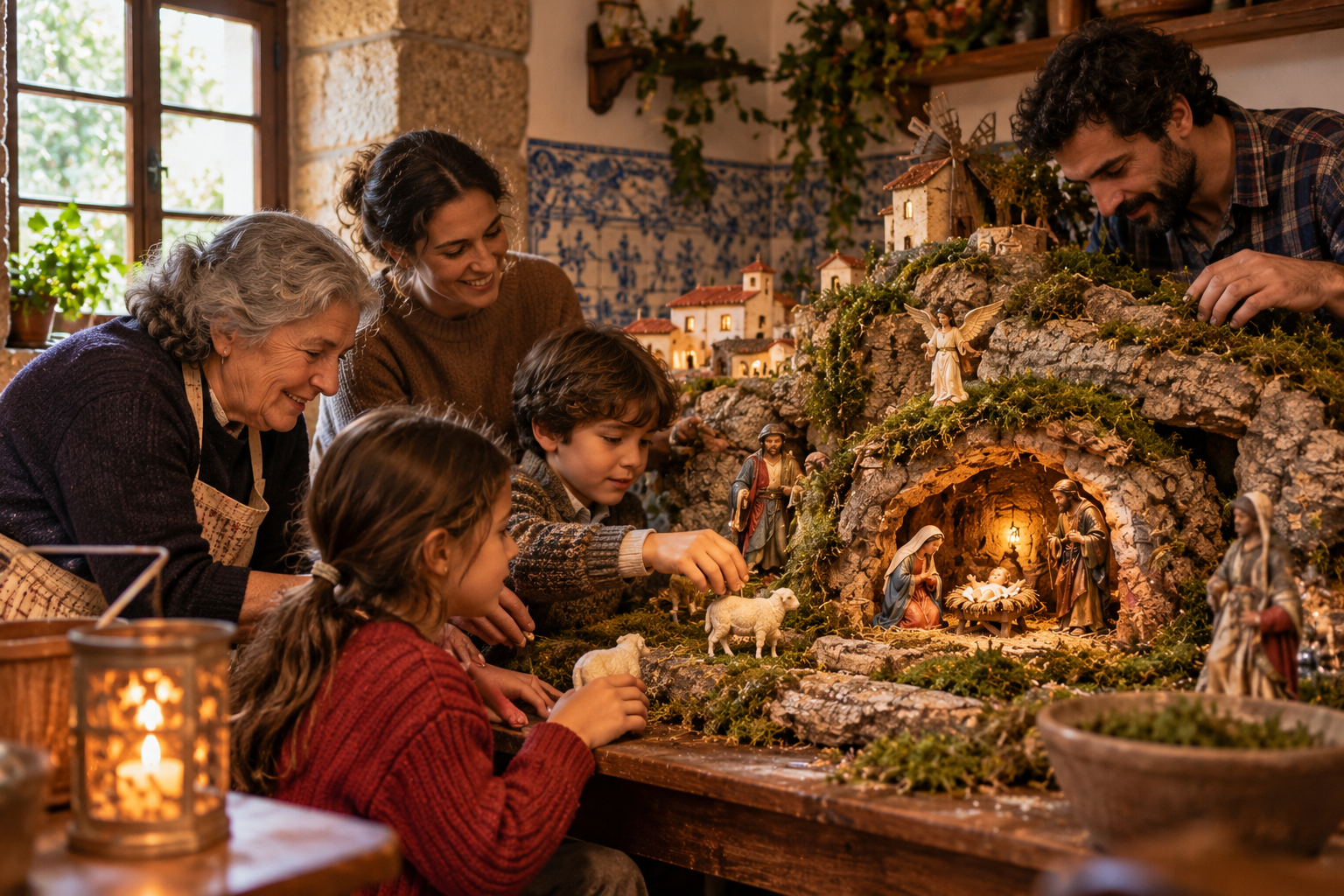
In some households, creating the presépio is an event in itself. Families gather moss, stones, branches and pieces of cork to construct miniature landscapes. Small houses are arranged along winding paths, while tiny figures are carefully positioned around the stable. Children often take particular pleasure in adding new characters each year, gradually expanding the scene into something wonderfully elaborate.
Traditionally, some families leave the manger empty until Christmas Eve, when the figure of the infant Jesus is placed inside to mark his birth. It is a simple gesture, but one filled with meaning — a reminder that, beneath the decorations and festivities, Christmas remains a celebration of faith and family.
From Lisbon to the Alentejo: Discovering Portugal's Nativity Traditions
The beauty of the presépio is that no two are quite alike. Across Portugal, regional traditions, local materials and individual imagination have given rise to a remarkable variety of Nativity scenes.
In Lisbon, historic churches preserve some of the country's finest examples of religious sculpture, while seasonal exhibitions reveal the creativity of contemporary artisans. Further south, the Alentejo has a particularly strong tradition of working with clay. In the town of Estremoz, colourful ceramic figures have been made for centuries, depicting saints, shepherds, musicians and characters from rural life.
Elsewhere, towns and villages create large community presépios, sometimes within shopping malls, town squares or church interiors. Some feature moving figures, running water and miniature landscapes, transforming the Christmas story into a wonderfully imaginative spectacle. These displays are often the work of local volunteers and artisans, reflecting the pride that Portuguese communities take in preserving their traditions.
A Tradition Worth Preserving
In an age when Christmas celebrations are increasingly shaped by commercial displays and elaborate decorations, the Portuguese presépio offers something refreshingly different. Its beauty lies not in perfection, but in the personal touches that make each scene unique.
A tiny clay shepherd might have been bought at a village market decades ago. A miniature house may have been made by a grandparent. A collection of figures might have grown gradually as children became parents and grandparents themselves. These small objects become part of a family's history, brought out each December with the same affection as treasured photographs or familiar Christmas recipes.
And perhaps that is what makes the presépio so enduring. It connects generations through a shared ritual, celebrates the skill of local artisans and preserves a sense of wonder that belongs as much to childhood as it does to faith.

Experiencing Christmas in Portugal
For visitors, Christmas offers a particularly atmospheric time to discover Portugal.
At Classic Portugal Travel, we believe that the most memorable journeys are those that reveal the character of a destination through its people, customs and stories.


