Ask travellers to picture Portugal and the same places tend to appear: Lisbon's tiled streets, the vineyards of the Douro Valley and the beaches of the Algarve. Travel further north, however, and Portugal begins to feel very different. This is Minho, the lush region tucked into Portugal's northwestern corner, between the Atlantic Ocean, the Spanish border and the mountains of Peneda-Gerês.
It is one of the country's greenest regions, filled with historic towns, granite villages, vineyards, rivers and some of Portugal's most beautiful countryside. It is also a place where traditions remain very much part of everyday life. Yet outside Portugal, Minho remains surprisingly little known. For travellers looking beyond Europe's familiar destinations, that is precisely what makes it so interesting.
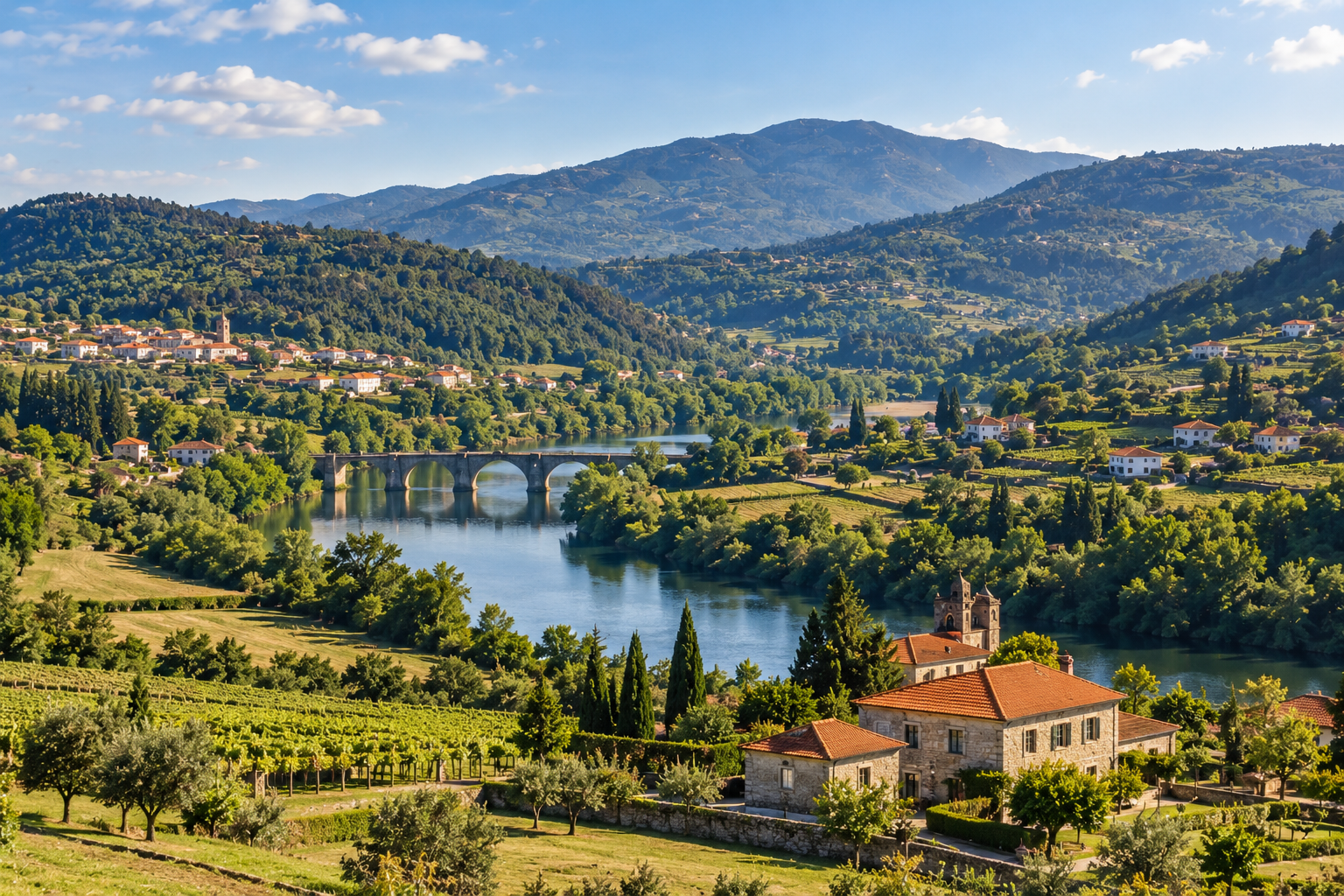
A greener side of Portugal
Minho does not necessarily match the image many first-time visitors have of Portugal. The landscape here is intensely green. Vines climb traditional granite supports, rivers run through deep valleys and forested mountains rise along the country's northern border. Small villages are scattered between farmland, vineyards and ancient stone walls.
The region's climate is wetter than southern Portugal, which creates the extraordinary green landscapes for which Minho is known. There is also a wonderful sense of space. Rather than travelling between major attractions, some of the pleasure comes simply from moving through the countryside: following a river, stopping in a small town, visiting a winery or finding a restaurant serving dishes that have belonged to the region for generations.
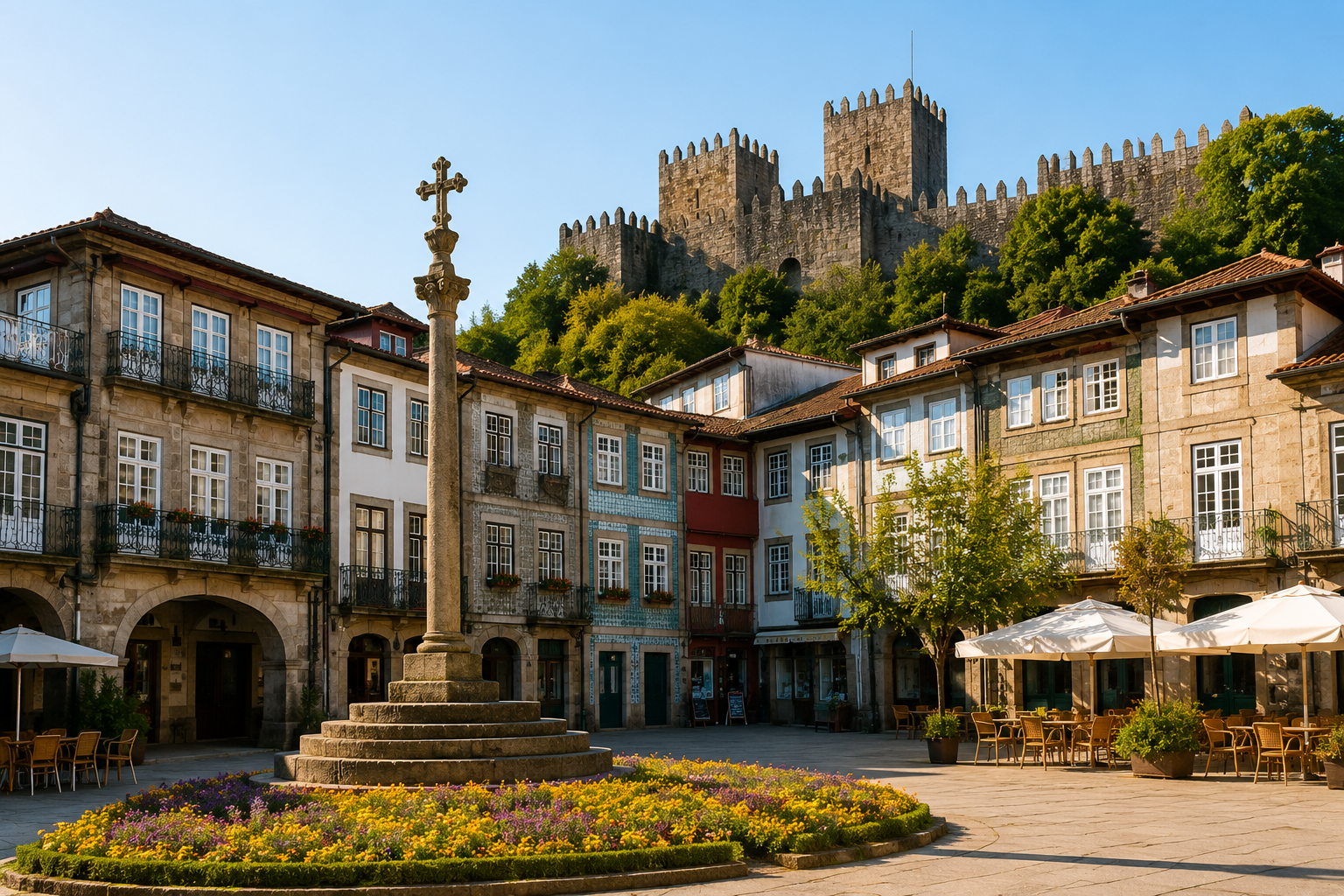
Guimarães: where Portugal began
Few places are more important to Portuguese history than Guimarães. Often described as the birthplace of Portugal, the city is closely associated with Afonso Henriques, Portugal's first king, and the formation of the Portuguese nation in the 12th century. Its beautifully preserved historic centre is now a UNESCO World Heritage Site.
Medieval streets lead between granite buildings, small squares and elegant houses with wooden balconies. Above the city stands Guimarães Castle, while nearby the Palace of the Dukes of Braganza provides another glimpse into Portugal's history. Despite its significance, Guimarães feels remarkably manageable. It is the kind of city where history is not confined to one monument. It surrounds you as you walk.
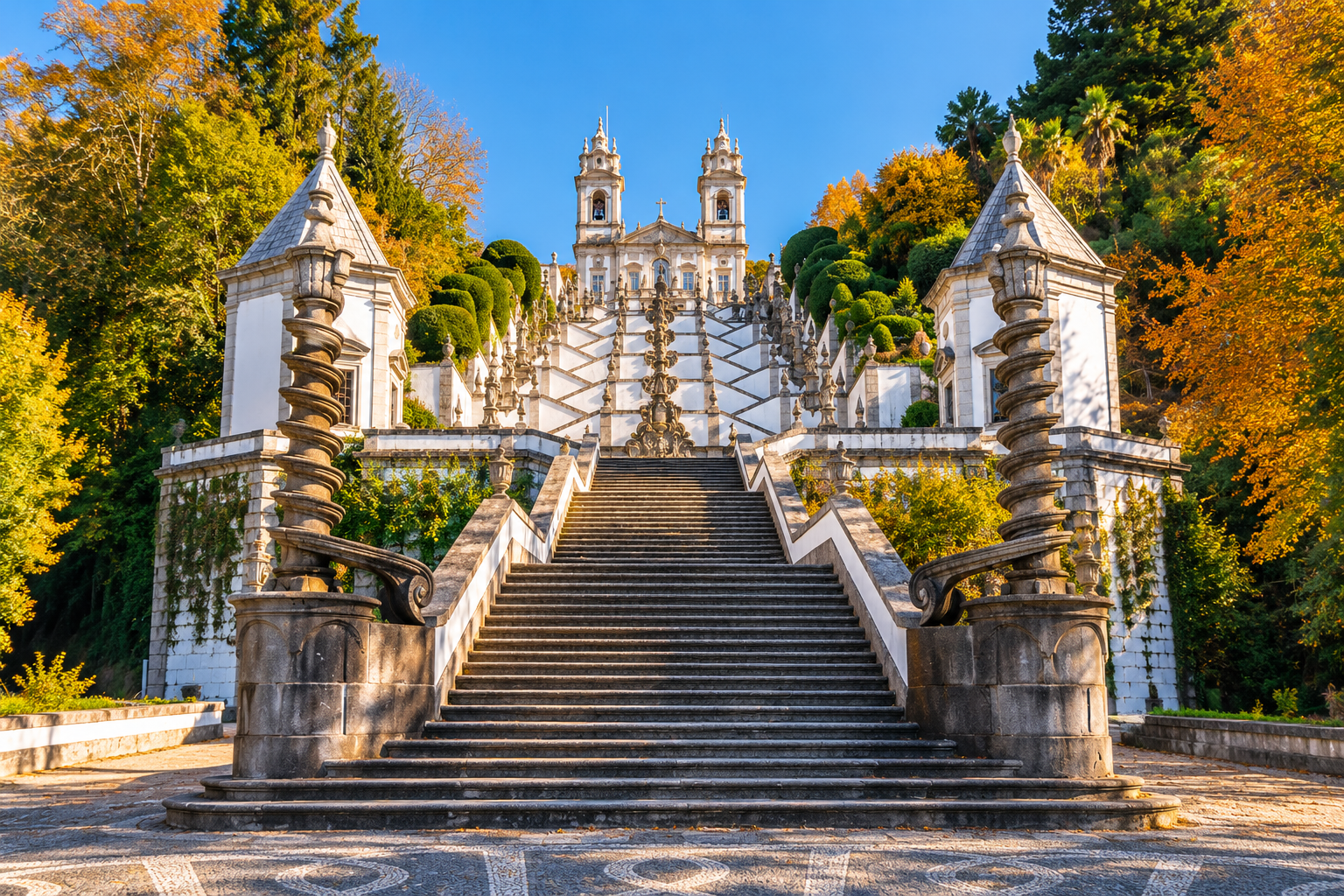
Braga: ancient history and extraordinary architecture
A short distance away, Braga offers a completely different atmosphere. One of Portugal's oldest cities, Braga has been an important religious centre for centuries. Churches, gardens and grand historic buildings fill its centre, but the city is also youthful and lively. Its most famous landmark lies just outside the centre.
Bom Jesus do Monte, a UNESCO World Heritage Site, rises above Braga on a wooded hillside. Its monumental Baroque staircase zigzags dramatically towards the sanctuary, with fountains, chapels and terraces appearing along the way. Visitors can climb the staircase, although there is a rather more leisurely alternative: the historic funicular, which has been carrying passengers up the hillside since the 19th century.
Braga works particularly well when combined with Guimarães, but both cities deserve more than simply being treated as quick stops on the way somewhere else.
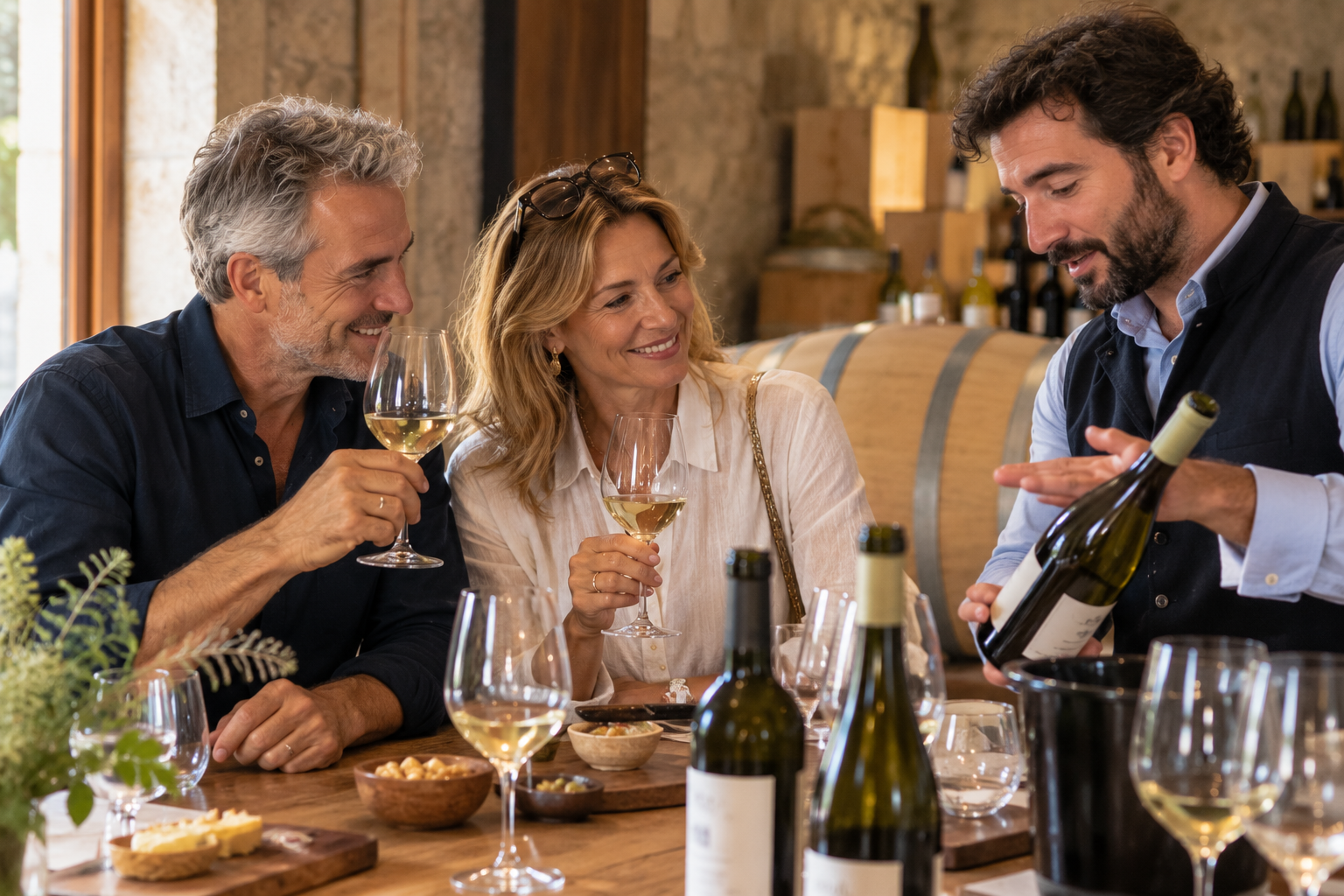
Vinho Verde is much more interesting than many people realise
Minho is also the home of Vinho Verde. The name literally translates as "green wine", although it refers to the wine's youthful character rather than its colour. The Vinho Verde region produces white, red and rosé wines, with considerable differences between its subregions and grape varieties.
For many international visitors, Vinho Verde means a light, inexpensive wine enjoyed on a summer afternoon. The reality is considerably more interesting. Producers across the region are creating increasingly sophisticated wines from indigenous grape varieties, including Alvarinho, particularly around Monção and Melgaço near the Spanish border.
Visiting the vineyards here feels very different from the monumental terraces of the Douro. Minho is softer and greener. Vineyards sit between historic estates, villages and woodland, and wine experiences can often feel wonderfully personal. For travellers interested in Portuguese wine, it provides an entirely different chapter of the story.
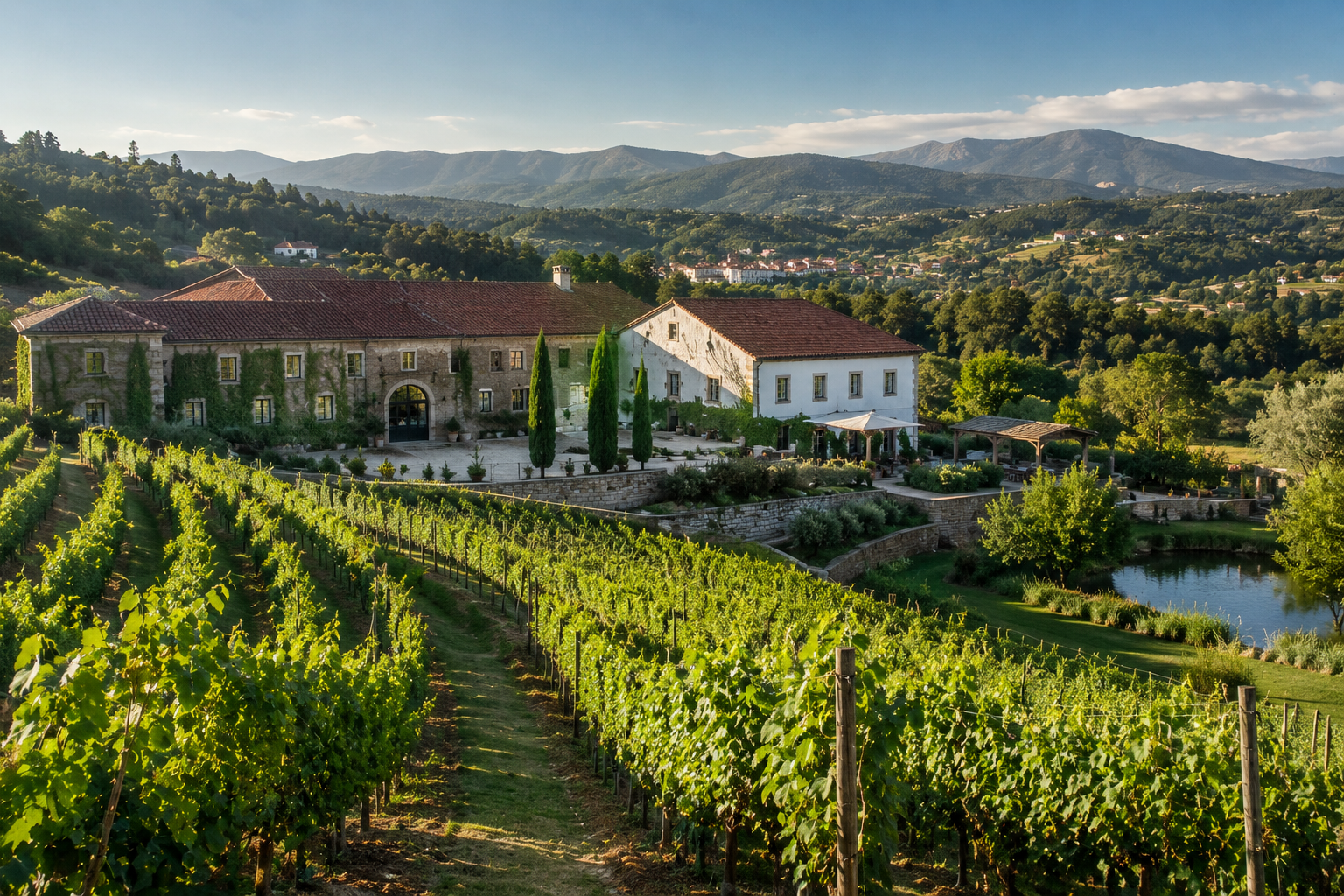
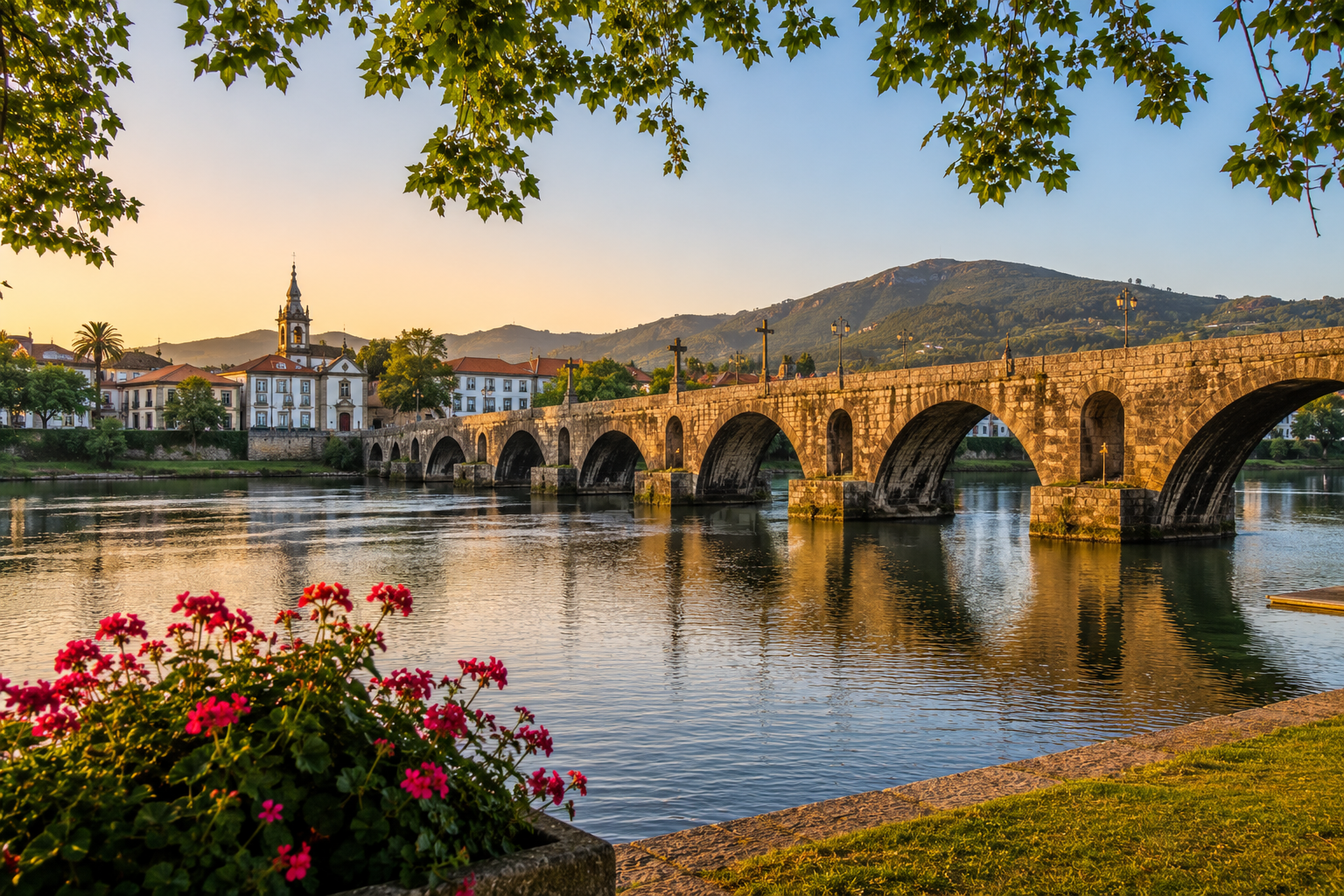
Ponte de Lima and Portugal at a slower pace
Minho is also home to some of Portugal's most attractive smaller towns. Ponte de Lima, often described as Portugal's oldest vila, sits beside the Lima River and takes its name from the long bridge crossing the water. Its historic centre, riverside gardens and surrounding countryside make it an excellent place to slow the pace of a journey.
This is part of Minho's appeal. Not every day needs to revolve around a major monument. A morning might begin in a market, continue with lunch in a countryside restaurant and finish at a wine estate. Another might involve exploring a historic town before returning to a beautiful rural hotel for the afternoon. For travellers accustomed to racing between Europe's headline destinations, that change of rhythm can be surprisingly luxurious.
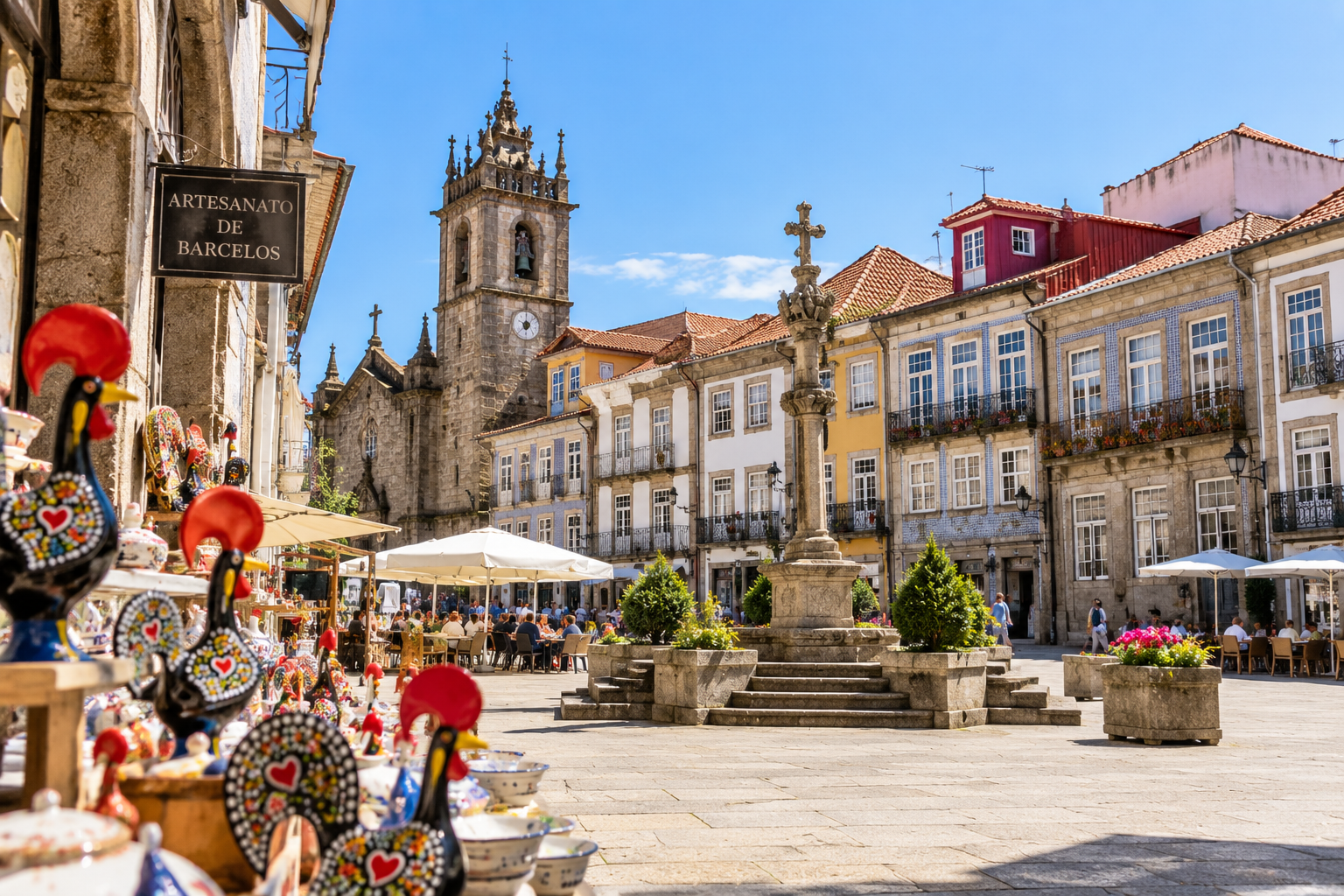
Barcelos: ceramics, markets and the famous Portuguese rooster
The colourful town of Barcelos has a special place in Portuguese culture. It is closely associated with the famous Galo de Barcelos, the brightly decorated rooster that has become one of Portugal's most recognisable national symbols. According to local legend, a roasted rooster miraculously crowed to prove the innocence of a wrongly accused pilgrim.
Today, Barcelos is particularly known for its pottery and traditional crafts. The town has a rich tradition of figurative ceramics, with artisans producing everything from decorative roosters to wonderfully expressive clay figures. Its large Thursday market is another highlight, bringing together local produce, clothing, household goods and traditional handicrafts.
For visitors interested in Portuguese craftsmanship and everyday traditions, Barcelos offers an authentic and colourful introduction to the region.
Peneda-Gerês: Portugal's wild north
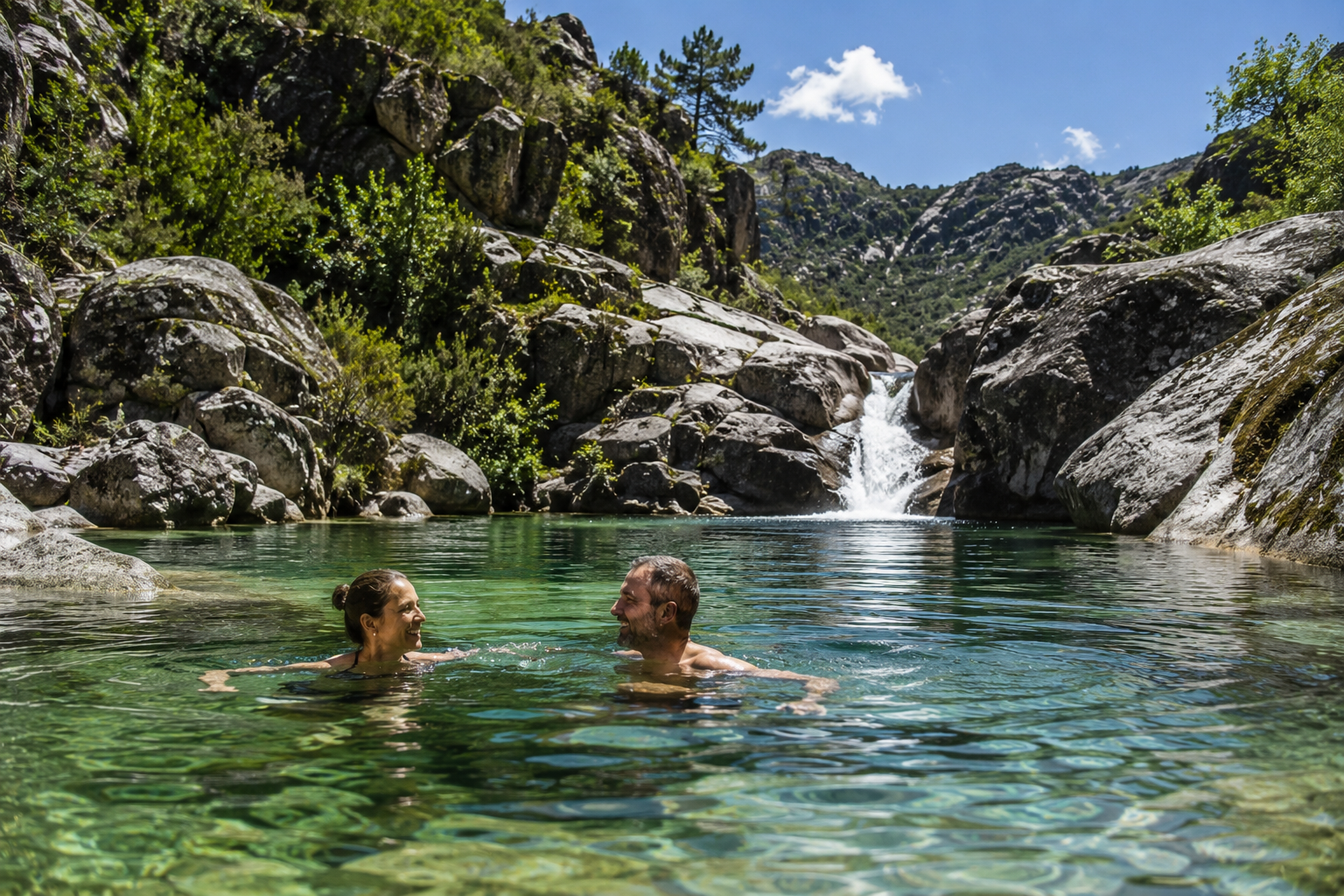
Continue towards the Spanish border and the landscape becomes increasingly dramatic. Peneda-Gerês National Park protects mountains, forests, rivers and traditional villages across Portugal's far north. Ancient paths cross the landscape, waterfalls appear between granite rocks and small settlements preserve a way of life shaped by the mountains.
Wild Garrano horses can still be found in the region, while hiking trails range from relatively gentle walks to more demanding routes through the mountains. Gerês adds another dimension to a northern Portugal journey. Within a relatively compact region, it is possible to move from historic cities to vineyards and then into genuinely wild landscapes.
The food deserves far more attention
Northern Portugal is also a destination for people who travel to eat. The cooking tends to be generous, regional and deeply connected to local ingredients. Along the coast, fish and seafood play an important role. Inland, dishes become heartier, with slow-cooked meats, local sausages and recipes that have changed very little over generations.
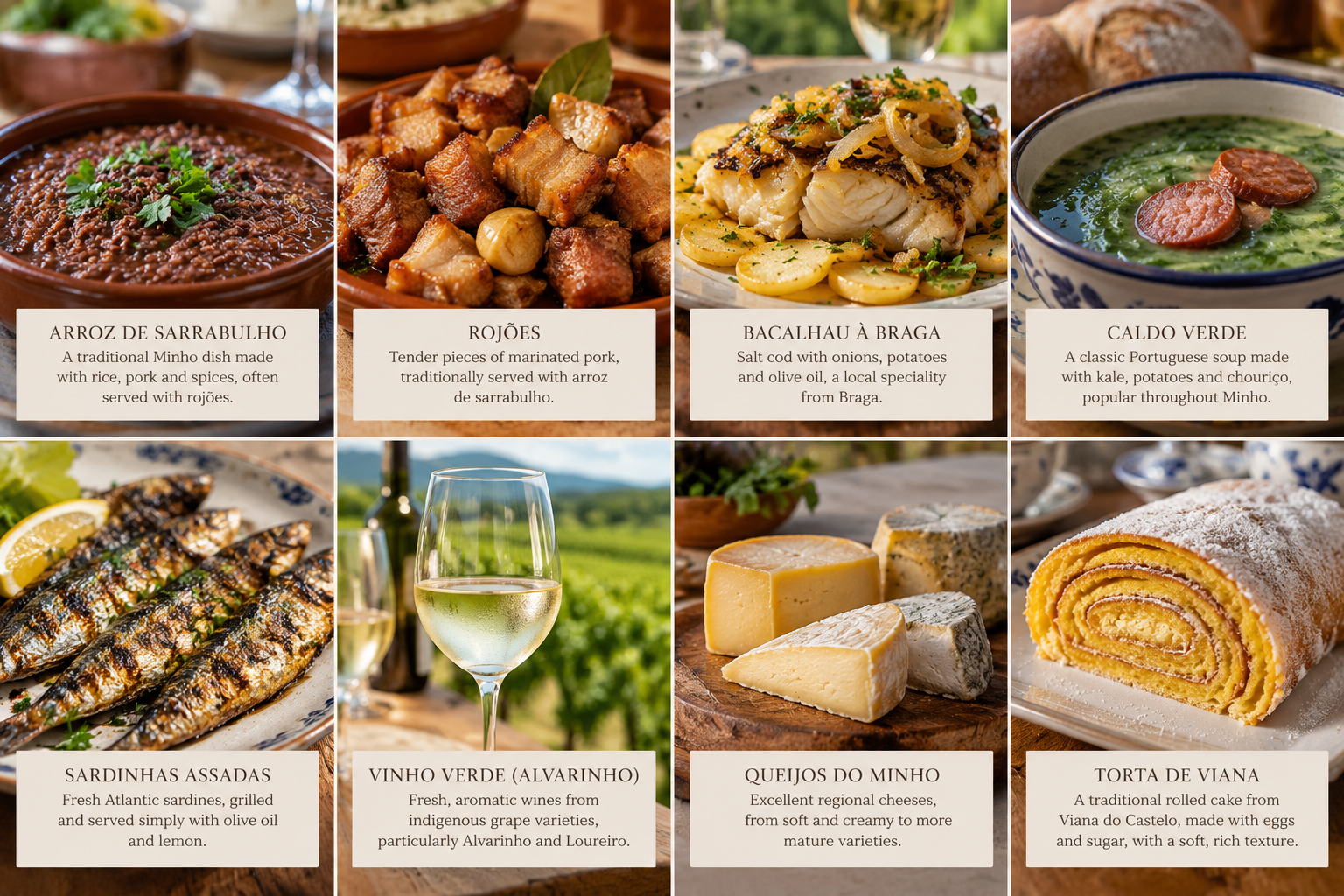
One of the region's best-known dishes is arroz de sarrabulho, traditionally accompanied by rojões, while Braga is associated with dishes such as bacalhau à Braga. Further north, excellent cheeses, smoked meats and rustic breads appear alongside the wines of the region. This is not food designed primarily for tourists. That is part of its charm. Some of the most memorable meals in northern Portugal can be found in family-run restaurants where the menu reflects what people in the region actually eat.
The Atlantic is never far away
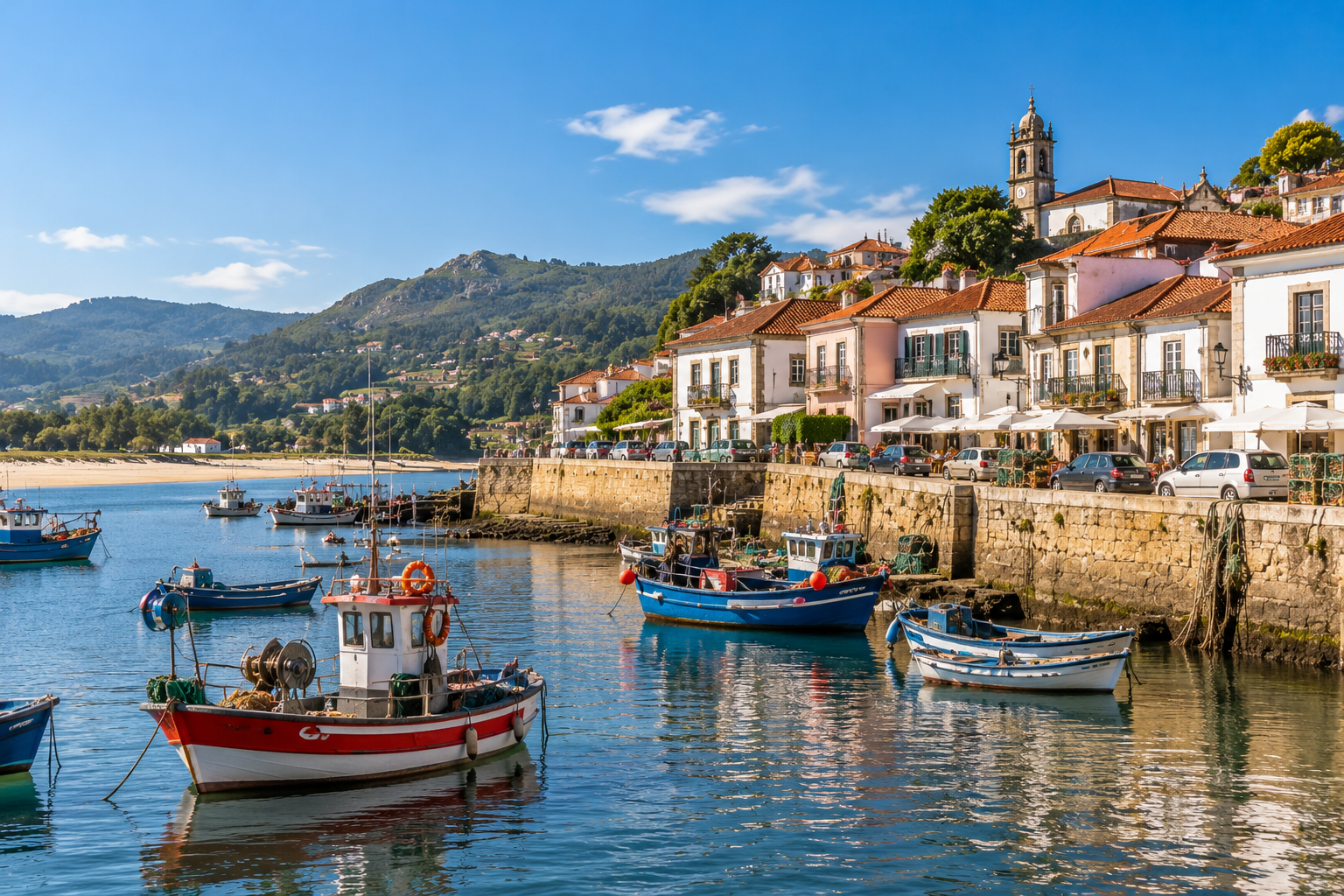
Minho's western edge meets the Atlantic, creating another side to the region altogether. Historic Viana do Castelo sits close to the coast, with the magnificent Sanctuary of Santa Luzia overlooking the city, Lima River and ocean from high above. Its attractive historic centre is filled with elegant buildings, traditional shops and reminders of the city's maritime heritage. Viana is also known for its distinctive gold filigree jewellery and colourful traditional costumes.
Further north, Caminha sits where the Minho River meets the Atlantic, directly across the water from Spain. With its handsome main square, narrow streets and riverside setting, it is one of the region's most appealing small towns.
Nearby, the beaches of Moledo and the coastal landscapes around Vila Praia de Âncora offer a wilder Atlantic atmosphere than the resort beaches of southern Portugal. This coastline is shaped by fishing traditions, windswept beaches, estuaries and small seaside communities. It is particularly beautiful for travellers who enjoy coastal walks, fresh seafood and places where the ocean remains part of everyday life.
Beautiful Places to Stay in Minho
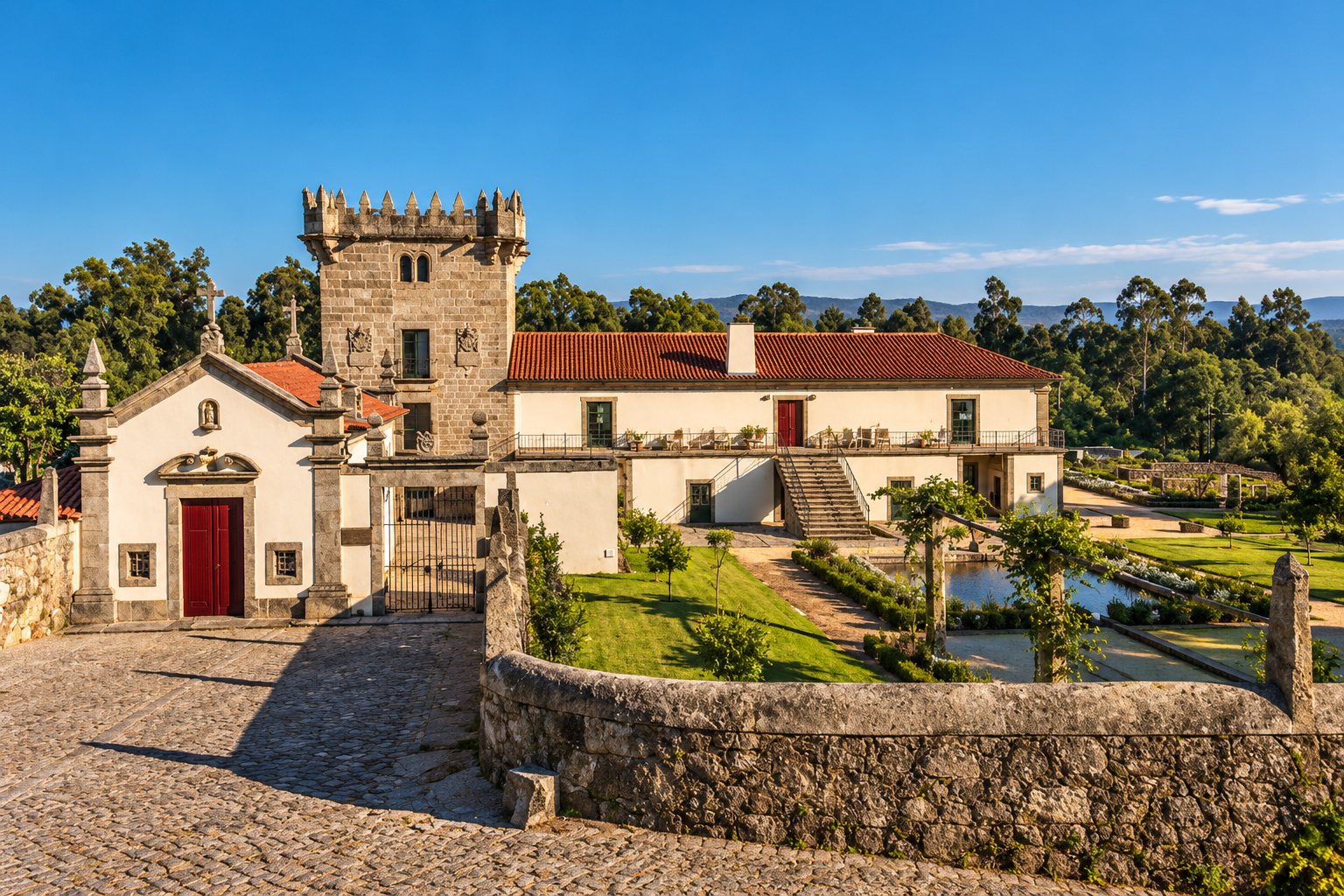
One of the pleasures of exploring Minho is the opportunity to stay somewhere that feels connected to the landscape and history of the region. Rather than large resort hotels, some of the most appealing accommodation can be found in restored manor houses, historic estates and intimate countryside retreats, surrounded by vineyards and woodland and combining contemporary comfort with the character of a traditional northern Portuguese property.
Around Guimarães, elegant boutique hotels provide a convenient base for exploring the historic city, while the countryside around Ponte de Lima offers charming manor houses and rural estates. These properties are part of the experience rather than simply somewhere to sleep.
Why Minho Deserves a Place on Your Portugal Itinerary
Minho is not a region of grand spectacle at every turn. Its appeal is quieter and, in many ways, more rewarding. It offers extraordinary history without the crowds of Portugal's most visited destinations, beautiful landscapes without the need to travel vast distances, and a strong sense of regional identity that is increasingly difficult to find in Europe's busiest tourist centres.
It is also surprisingly accessible. Porto makes an excellent gateway to the region, with Guimarães, Braga and the surrounding countryside all within relatively easy reach. For travellers with a week or more in northern Portugal, Minho combines beautifully with Porto and the Douro Valley, creating a journey that reveals several very different sides of the country.
At Classic Portugal Travel, we believe some of Portugal's most memorable experiences are found beyond the familiar routes.