Portugal's Iconic Tiles: A Fragile National Treasure
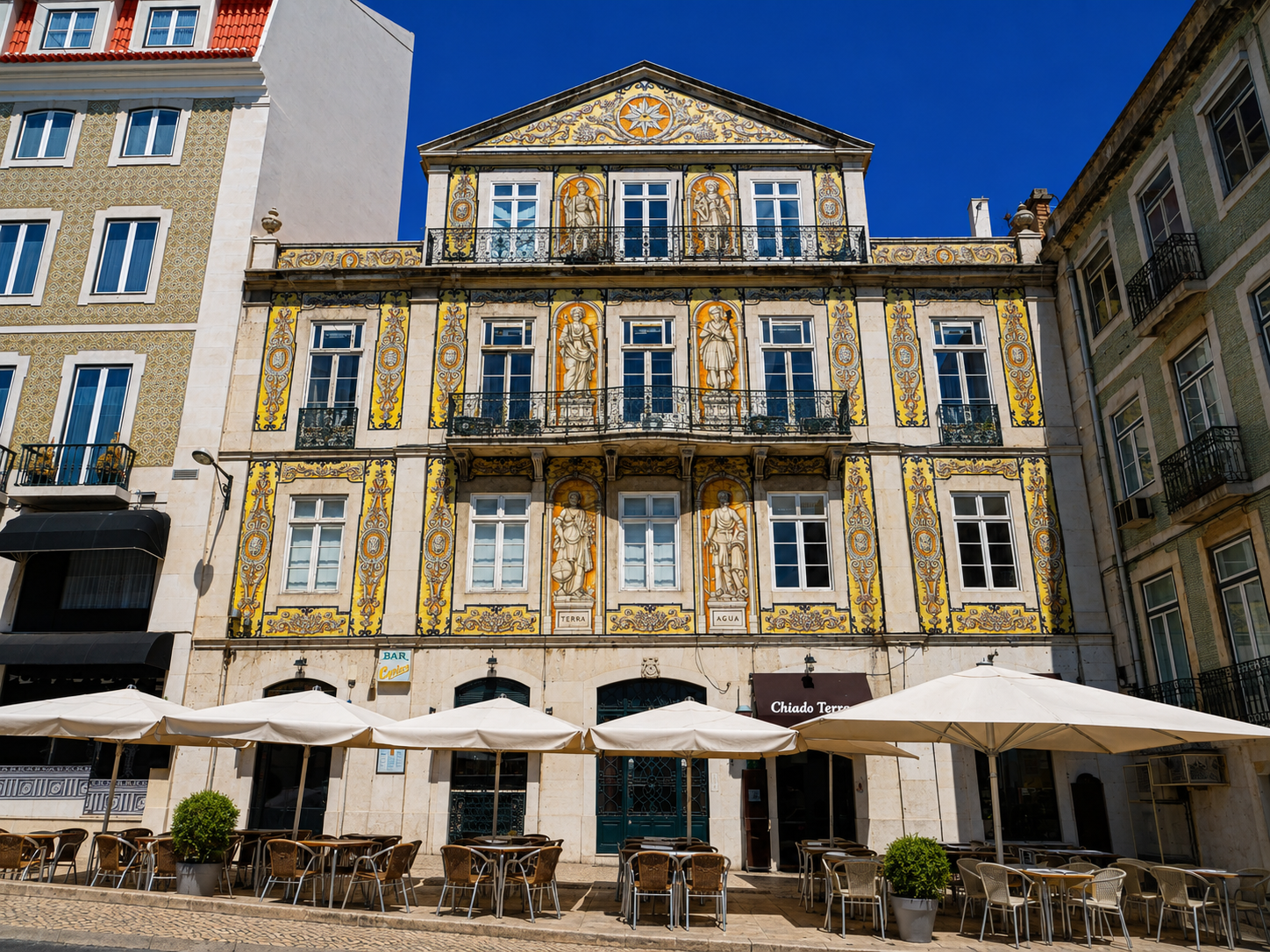
Walk through almost any historic Portuguese city and you will find stories written across its walls. Blue-and-white saints watch over quiet streets. Elaborate patterns frame weathered doorways. Battles, royal ceremonies and scenes of rural life unfold across churches, palaces and railway stations. Even the façades of ordinary homes can be transformed by colour, repetition and intricate ceramic detail. These are Portugal’s azulejos.
More than decoration, they are one of the country’s most distinctive forms of artistic expression. They record Portugal’s history, reveal centuries of cultural exchange and bring beauty to places both grand and everyday. To understand Portugal’s tiles is to understand something essential about Portugal itself.
What Are Azulejos?
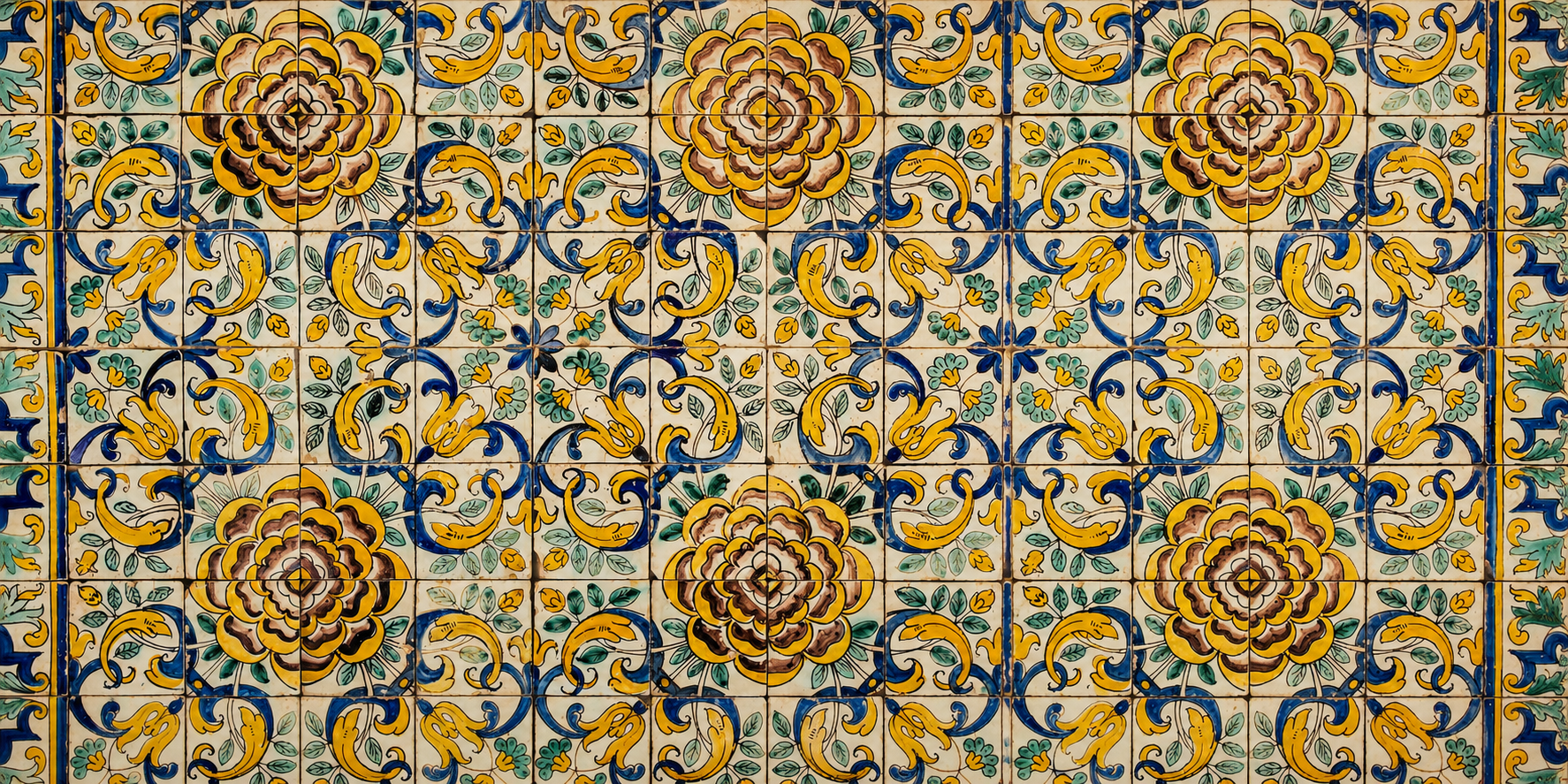
The Portuguese word azulejo is sometimes assumed to come from azul, the Portuguese word for blue. Its true origins are older. The name is generally linked to the Arabic term az-zulayj, referring to a small polished stone or piece of decorative mosaic. Tilework reached the Iberian Peninsula through Islamic artistic traditions, bringing geometric patterns, repetition and richly ornamented surfaces into palaces and places of worship.
Portugal did not invent the decorative tile. What it did was embrace the medium with extraordinary enthusiasm. From the late 15th century onwards, tiles began to occupy a privileged place in Portuguese architecture. Rather than being used only as borders or small decorative accents, they gradually came to cover entire walls, rooms, staircases, cloisters and building façades. Over time, the azulejo evolved from an imported luxury into a distinctly Portuguese visual language.
From Moorish Influence to the Portuguese Court
Portuguese tilemaking became closely associated with King Manuel I, who admired the Hispano-Moorish tilework of southern Spain. In the early 16th century, he commissioned thousands of colourful geometric tiles from Seville to decorate the Palácio Nacional de Sintra.
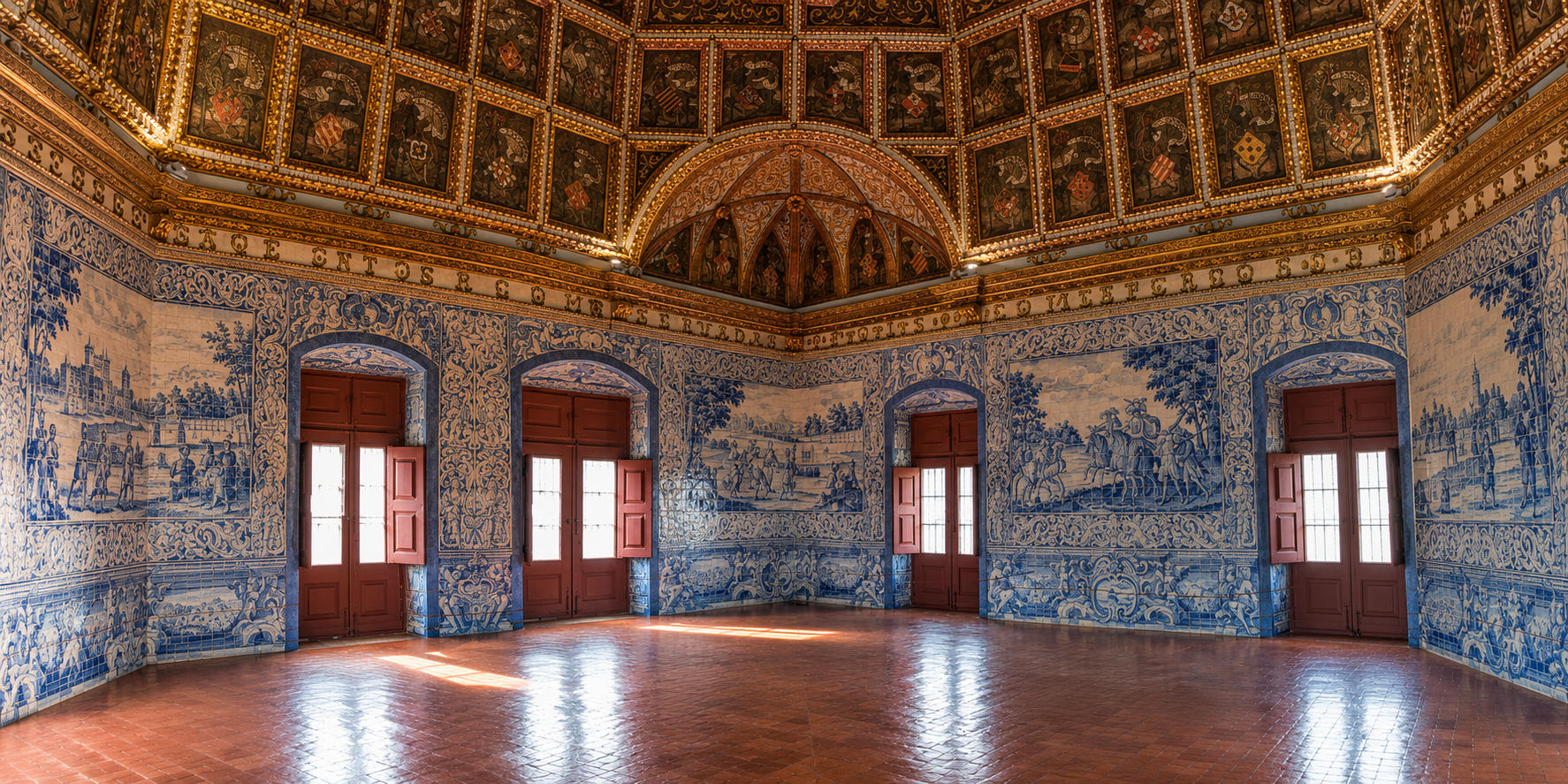
The palace still preserves one of Europe’s most important collections of Hispano-Moorish tiles in their original architectural setting, including designs featuring Manuel I’s armillary sphere emblem. What began as a royal fascination would eventually become a national tradition.
How Portugal Made the Azulejo Its Own
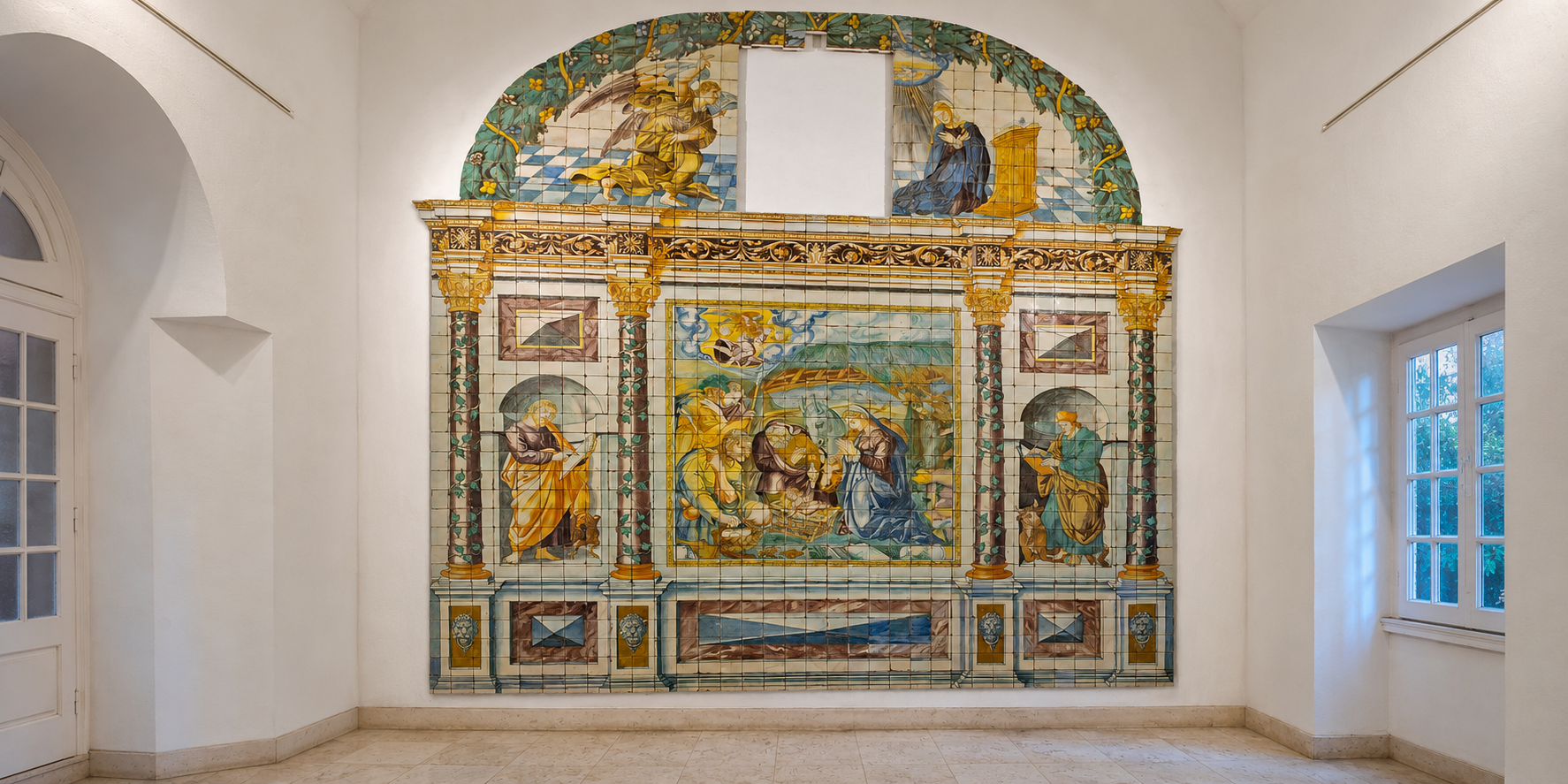
During the 16th century, new painting techniques allowed artists to create large narrative scenes across hundreds of tiles. Churches were decorated with biblical stories, while palaces featured mythology, hunting scenes and courtly life. Walls became ceramic canvases used to communicate faith, power and history. Portugal had transformed an international art form into something unmistakably its own.
Why Are Portuguese Tiles Often Blue and White?
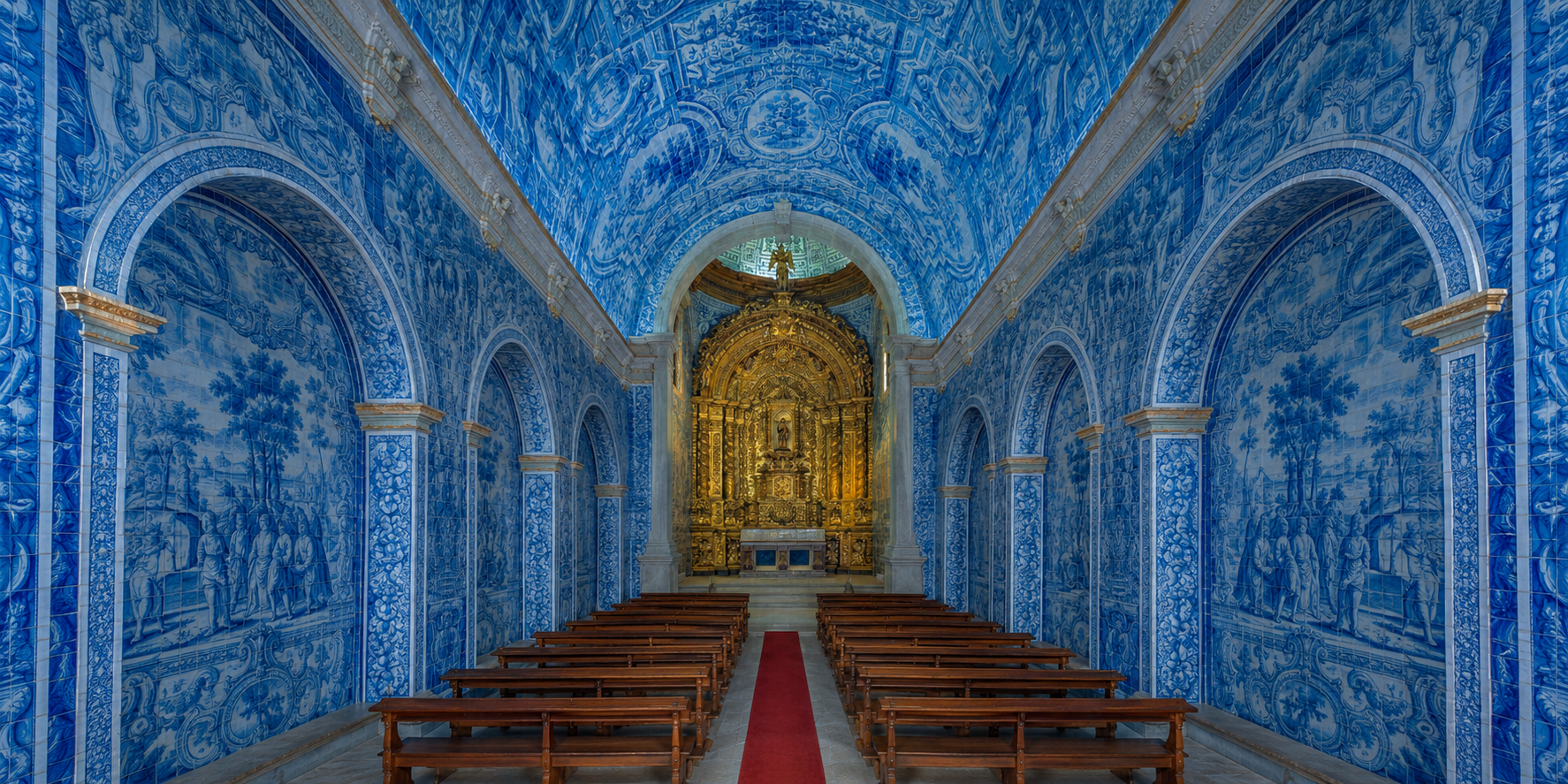
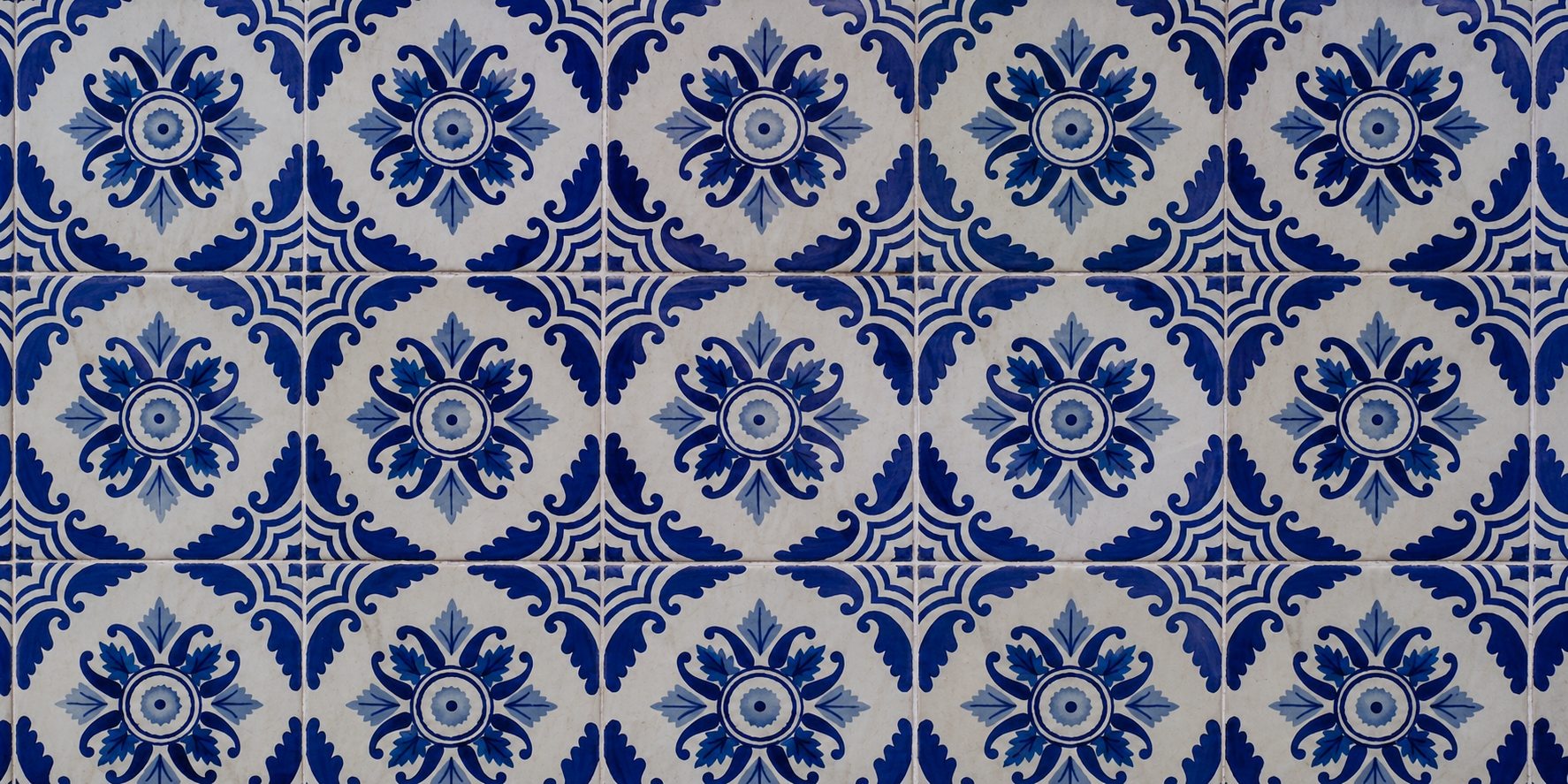
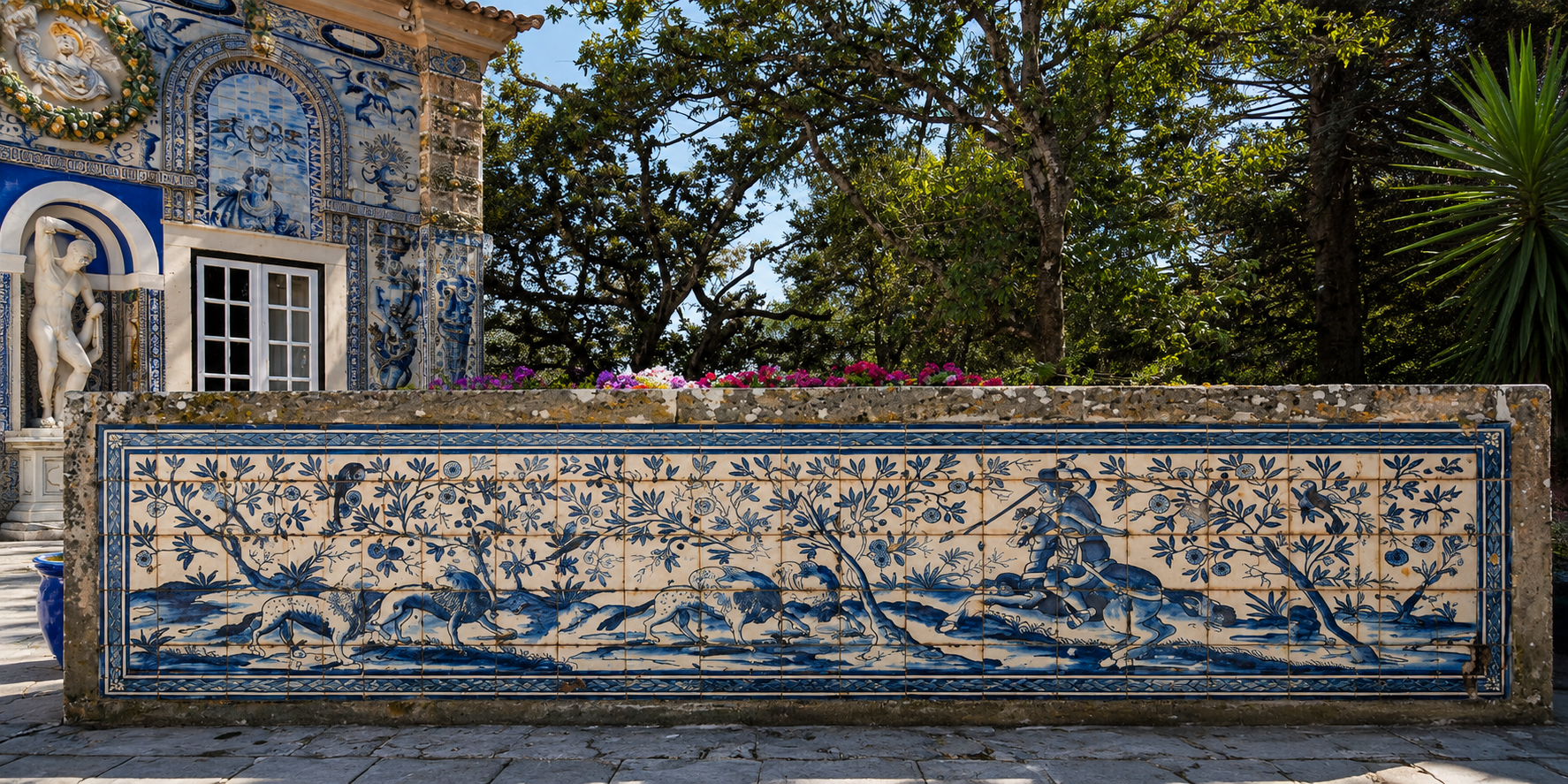
Portugal’s earliest azulejos were often colourful, featuring shades of green, yellow, brown and blue. The famous blue-and-white style became popular in the late 17th and early 18th centuries, influenced by Chinese porcelain and European ceramics. Portuguese artists used cobalt blue to create detailed scenes of religion, maritime journeys, landscapes and aristocratic life. Many of the grand tiled interiors associated with Portugal today date from this period.
Stories Hidden in the Tiles
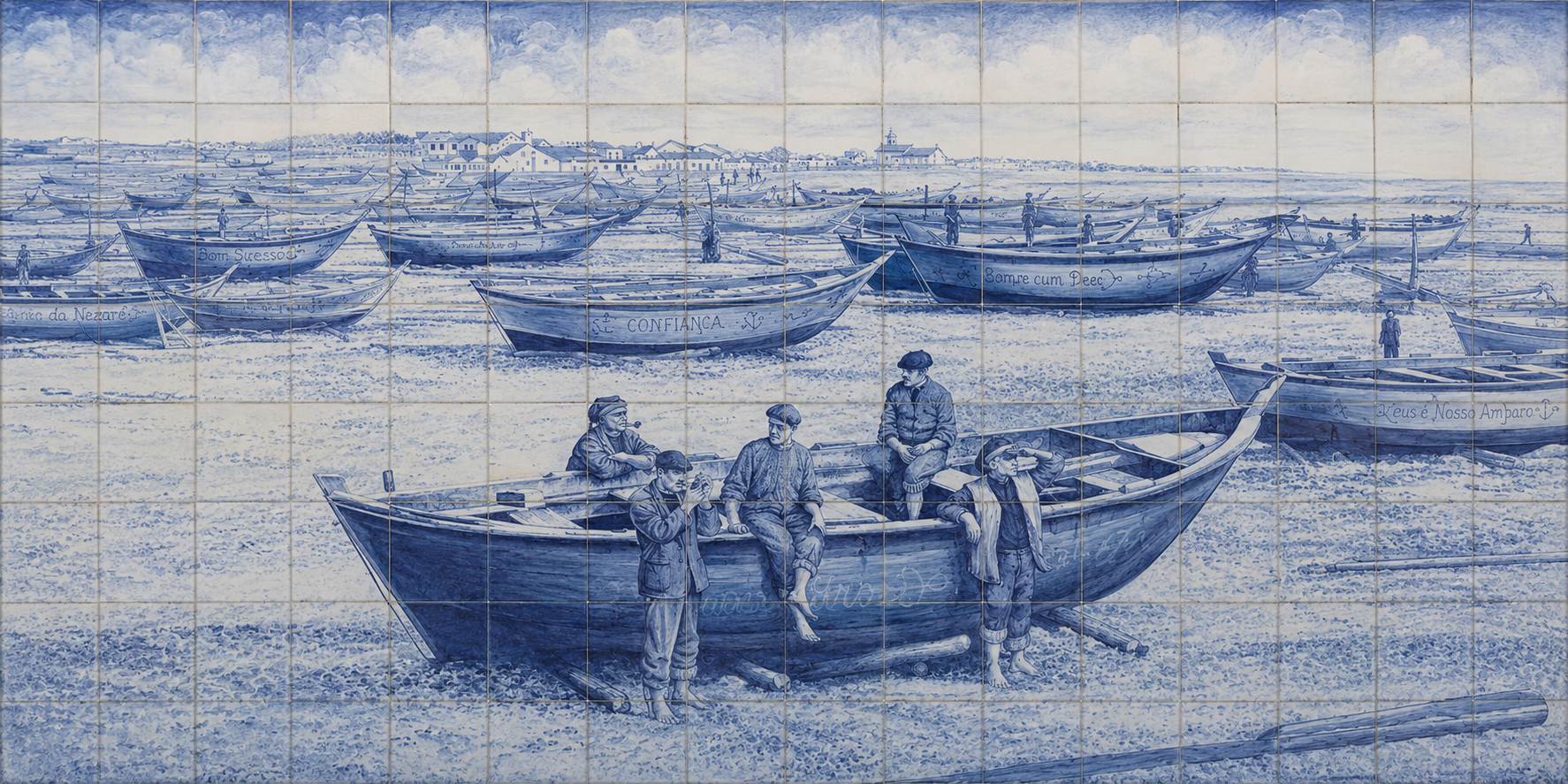
Azulejos are often admired first for their colour and pattern, but their real fascination lies in what they reveal. Some panels tell sacred stories, illustrating the lives of saints or episodes from the Bible. Others celebrate military victories, royal processions or Portugal’s maritime history. Look more closely and you may also find quieter scenes:
- Fishermen bringing their catch ashore
- Farmers working in vineyards or olive groves
- Carriages moving through country estates
- Village celebrations and religious processions
- Musicians, dancers and market sellers
- Ships entering historic ports
- Mythological characters and allegorical figures
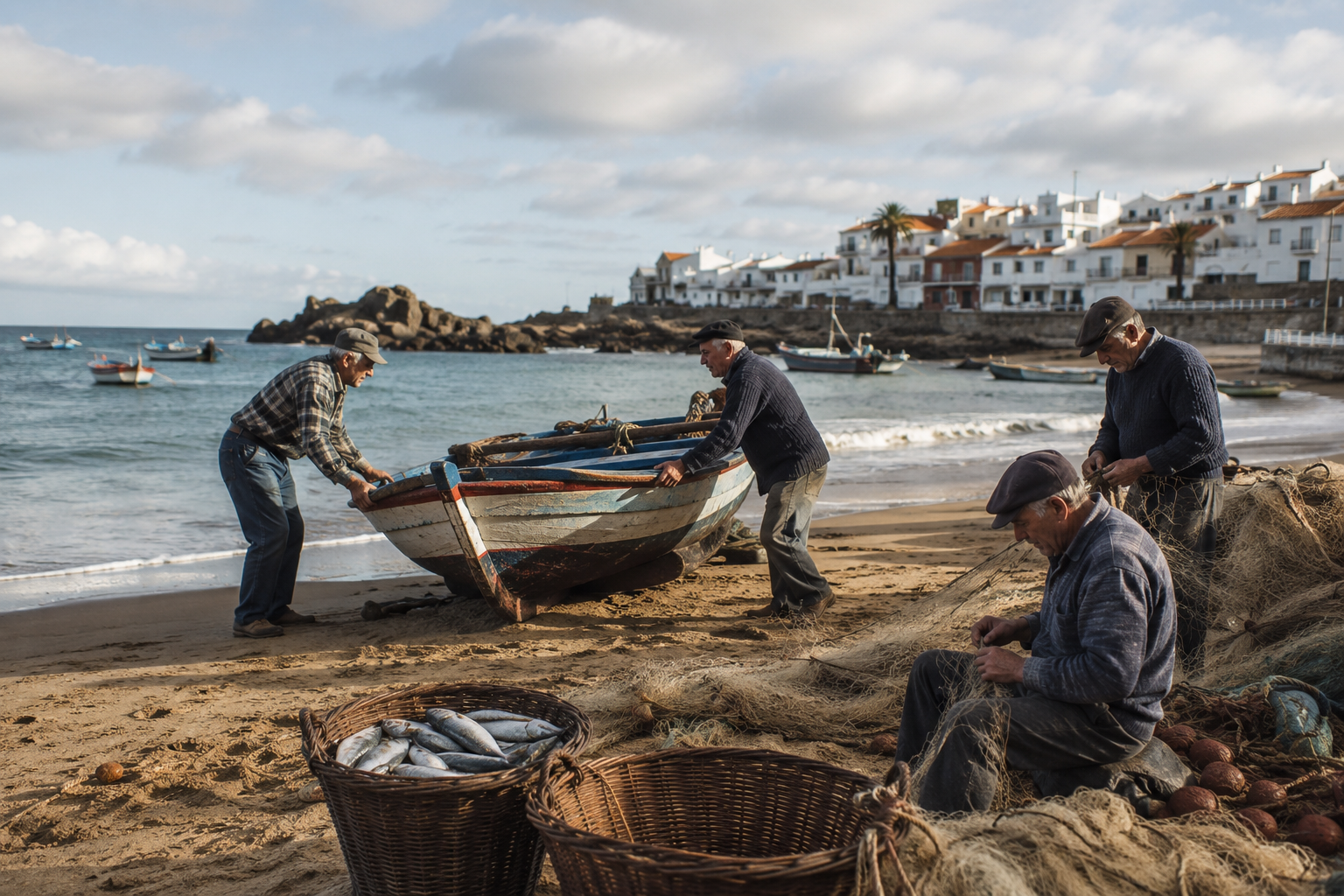
These images provide a visual record of Portuguese life across different periods. Clothing, transport, agricultural tools and buildings all appear within the compositions. In some cases, tiled panels preserve views of cities and landscapes that have since been transformed or lost. This makes the azulejo more than a decorative art form. It can also be read as a historical document.
How to Read an Azulejo Panel
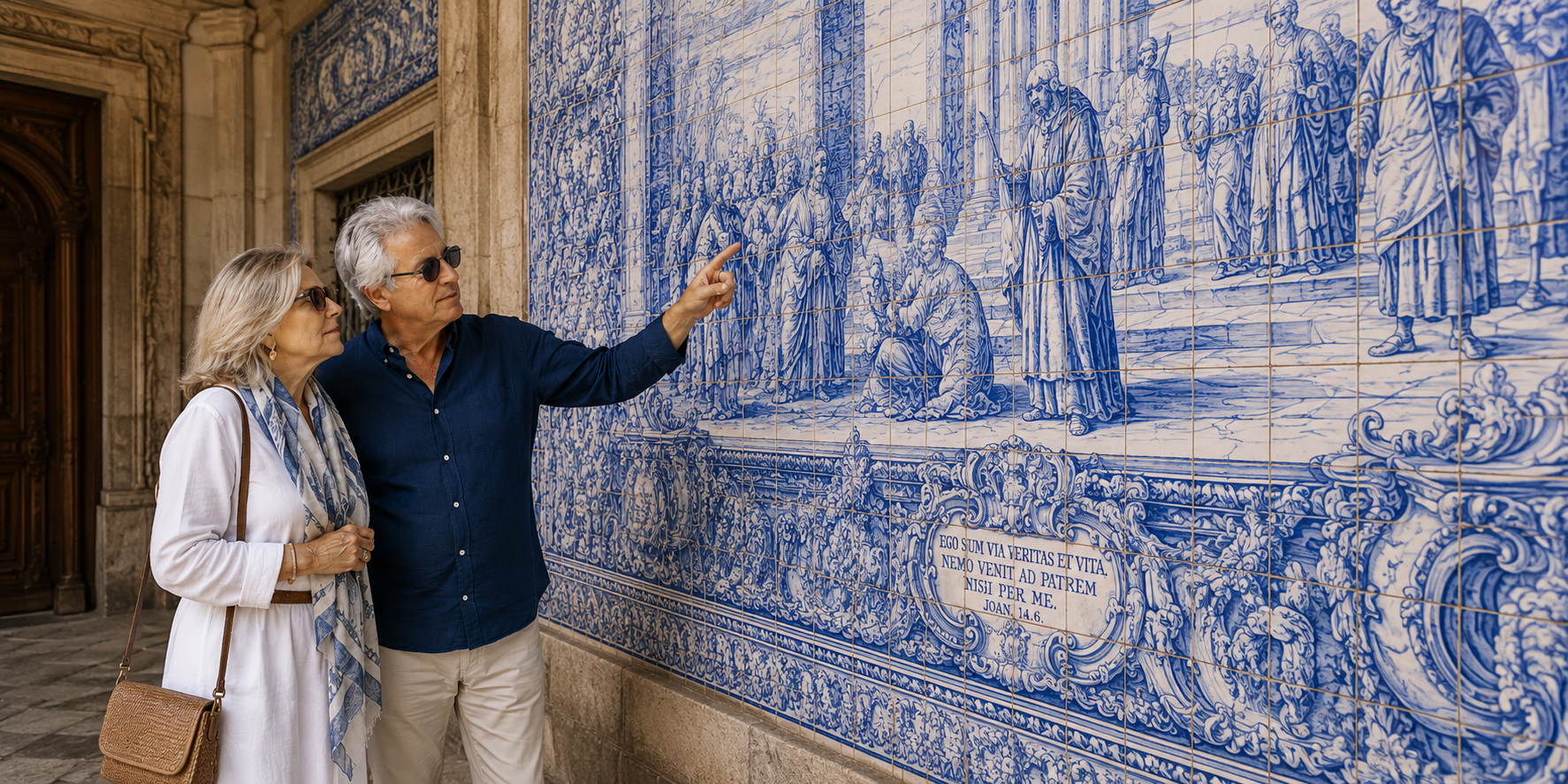
When standing in front of a tiled wall, it is easy to focus only on the overall image. Yet some of the most interesting details are found at the edges.
❖ Begin by looking at the border. Floral garlands, shells, scrolls, urns and architectural motifs can help indicate when a panel was made. Some borders imitate carved stone, gilded frames or richly woven textiles.
❖ Then look at the composition itself. Who occupies the centre of the scene? Which figures are larger or placed higher than others? These decisions were rarely accidental. They often indicate status, holiness or political importance.
❖ Clothing can reveal the period being represented, while ships, tools, animals and buildings provide clues about location and subject.
❖ It is also worth noticing the joins between the tiles. A large composition may appear seamless from a distance, but close inspection reveals how the artist divided faces, hands, landscapes and architectural details across individual ceramic squares. Slight variations in glaze and brushwork are part of the character of the finished work. Every panel rewards a slower look.
Portugal’s Tiles in the Modern Age
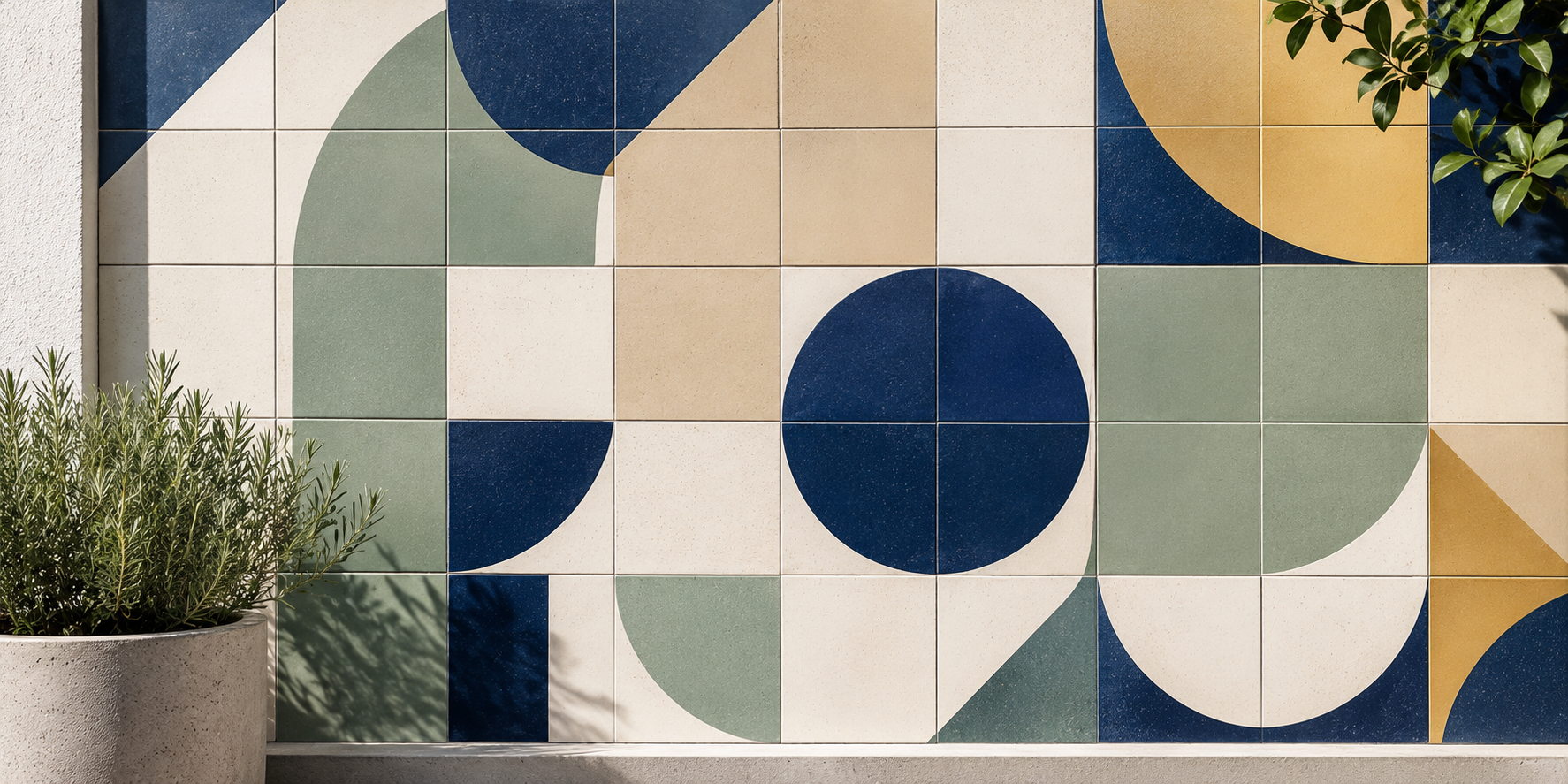
In the 20th century, artists brought azulejos into modern public spaces. Maria Keil’s geometric designs for Lisbon’s early metro stations showed how this historic art form could feel contemporary. Today, Portuguese tiles continue to appear in hotels, homes, restaurants and public buildings, with artists constantly finding new ways to reinterpret the tradition.
Where to See Portugal’s Most Beautiful Azulejos
For Early Tilework: Palácio Nacional de Sintra
The National Palace of Sintra is essential for understanding the beginnings of Portugal’s tile tradition. Its rooms and courtyards contain exceptional Hispano-Moorish designs associated with the reign of Manuel I, including geometric patterns and royal symbols. The collection allows visitors to see how imported techniques were incorporated into Portuguese court life.
For Five Centuries of History: Museu Nacional do Azulejo
Lisbon’s National Tile Museum traces the historical, artistic and technical development of azulejos from the late 15th century to the present day. Housed in the former Convent of Madre de Deus, it combines an important national collection with a magnificent historic setting. One of its best-known works is the vast panoramic panel showing Lisbon before the earthquake of 1755. The scene preserves a remarkable view of the city and waterfront before large areas of the capital were destroyed and rebuilt.
For Monumental Storytelling: São Bento Station, Porto
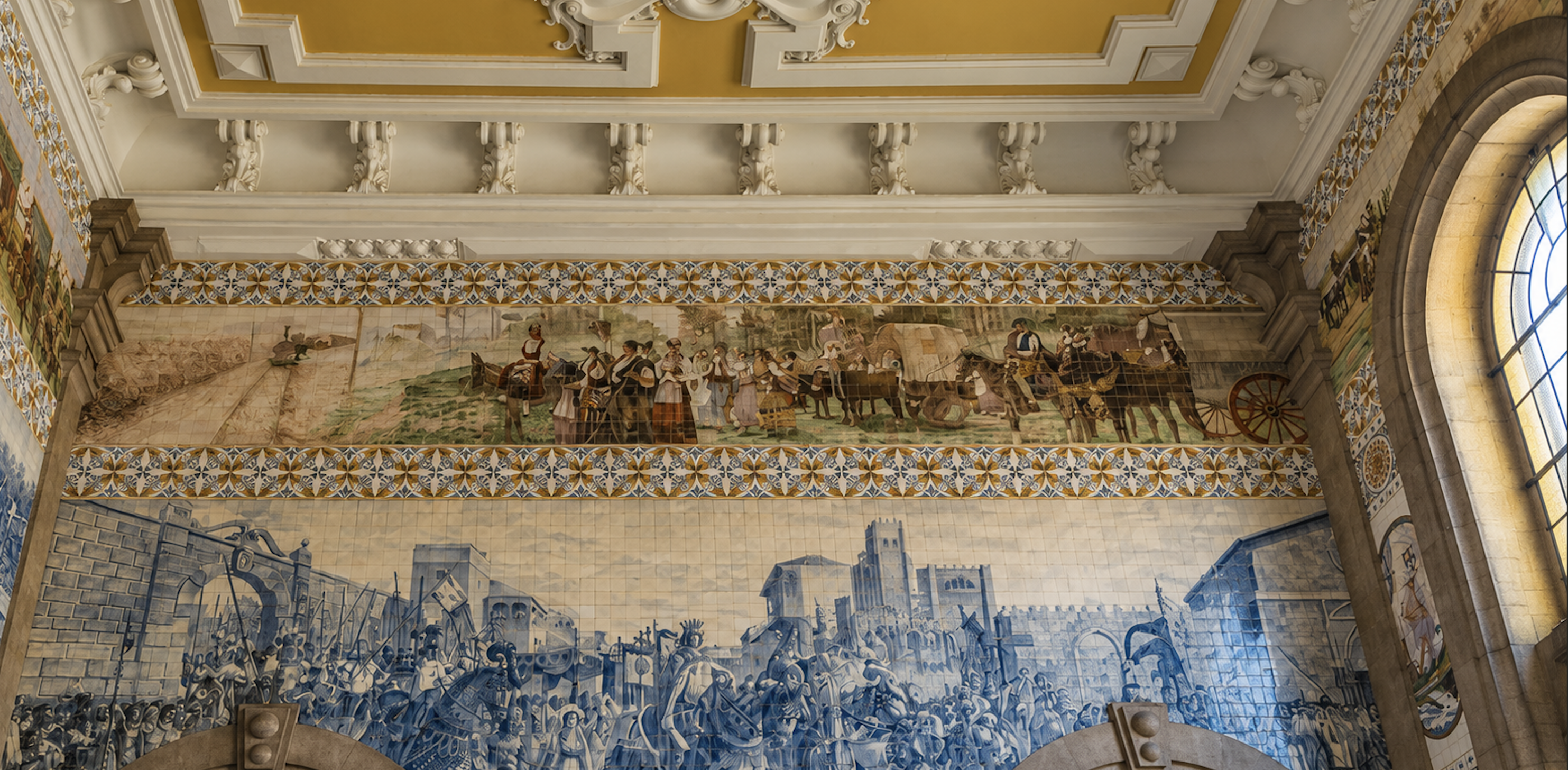
The entrance hall of São Bento railway station is one of Portugal’s most impressive public interiors. Its monumental blue-and-white panels illustrate episodes from Portuguese history alongside scenes of traditional rural life. Travellers often pass through the station quickly, but its walls deserve to be examined as an artwork in their own right.
For Palace Gardens: Palácio dos Marqueses de Fronteira
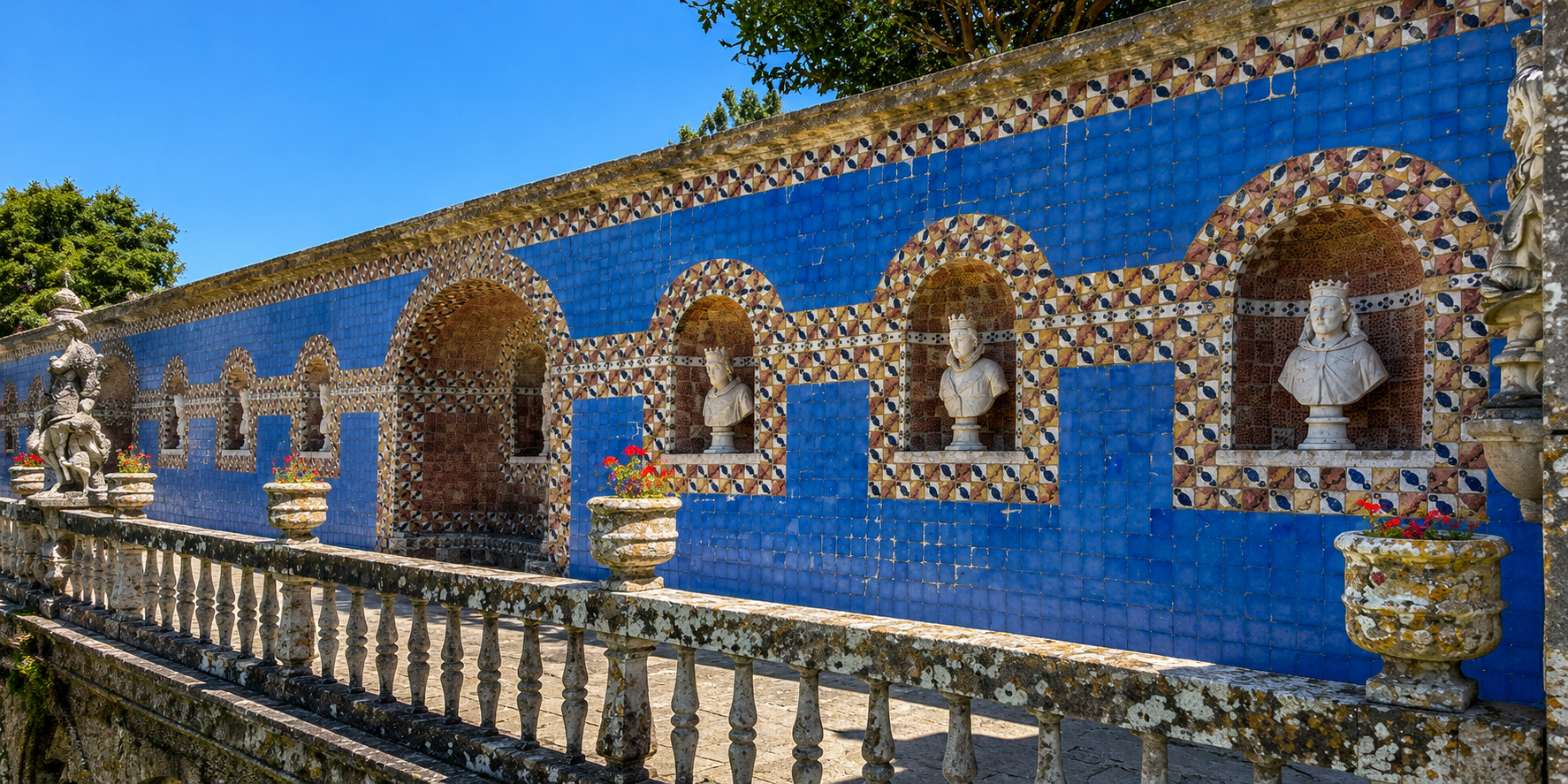
The 17th-century Palácio Fronteira in Lisbon is renowned for its decorative terraces, galleries and gardens. Its tiled panels depict battles, allegorical figures and courtly scenes. The relationship between architecture, gardens and ceramic art makes it one of the most atmospheric places to experience azulejos.
A Fragile National Treasure
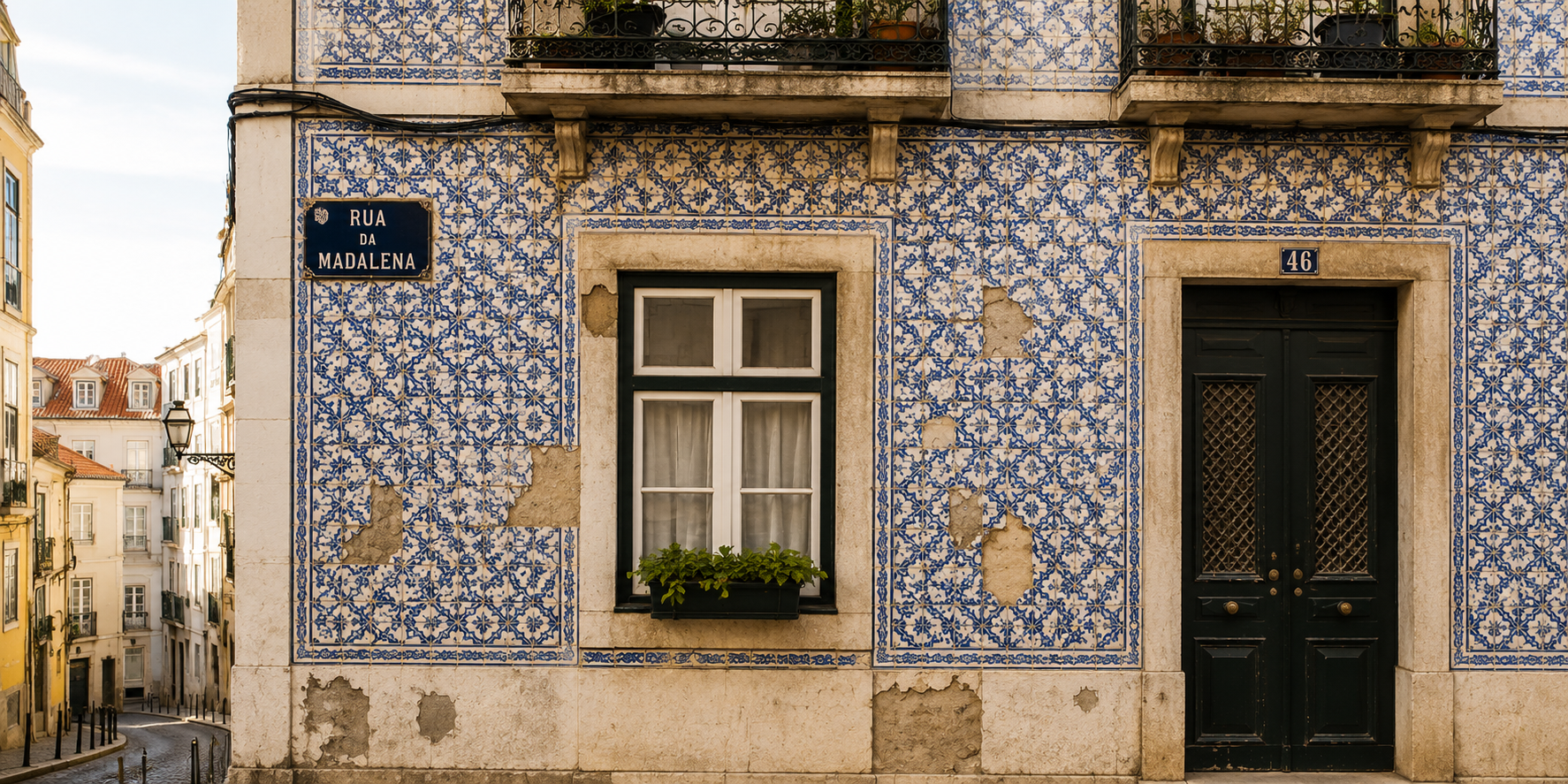
Azulejos may appear permanent, but they are vulnerable.Exposure to rain, salt, pollution and temperature changes can damage glazes and loosen tiles from exterior walls. Historic buildings may also suffer from neglect, insensitive renovation or redevelopment.
The theft of antique tiles has created an additional threat. Once removed from their architectural context, individual tiles lose much of their historical meaning and become difficult to trace.
Preservation therefore involves more than repairing ceramics. Conservators must understand the building, the original materials, the arrangement of the composition and the history of previous restorations. Matching old glazes and colours requires specialist knowledge, while replacing missing sections demands restraint and accuracy. In 2026, Parques de Sintra and the World Monuments Fund began a new conservation and restoration project focused on the important tiled surfaces of the National Palace of Sintra.
Projects such as this help ensure that Portugal’s tile heritage survives not only as decoration, but as part of the country’s architectural and cultural memory.
Experiencing the Art of Azulejos
The most rewarding way to appreciate Portuguese tiles is to slow down.
❖ Stand close enough to see the brushstrokes. Notice the tiny differences between handmade pieces. Observe how sunlight alters the colours of a glazed façade throughout the day.
❖ Travellers can also visit ceramic workshops to learn how tiles are designed, painted, glazed and fired.
❖ A hands-on painting experience reveals the precision involved. What appears to be a simple blue line can behave differently during glazing and firing, while a larger panel requires careful planning so that each tile contributes to the complete composition.
Creating a personal azulejo offers a deeper appreciation of the artisans behind Portugal’s tiled palaces, churches and streets. It also provides something increasingly rare in modern travel: the opportunity to spend time learning directly from a maker.
Discover the Art of Azulejos Privately
A privately designed azulejo experience can reveal parts of Portugal that are easily overlooked. A day might begin with specialist-led walk private access to a historic palace or estate, where monumental panels can be viewed within the architectural settings for which they were originally created. After lunch in a beautifully tiled dining room, the journey might continue to an artisan studio. Here, guests can meet a ceramic artist, learn about traditional production methods and paint an individual tile of their own.
Portugal’s Story, Told in Ceramic
Portugal did not invent the decorative tile. It transformed it. Across more than five centuries, the azulejo became a way to record faith, power, landscape, daily life and national memory. It brought colour to palaces and protection to modest homes. It turned railway stations into galleries and metro platforms into works of contemporary art.
Today, Portugal’s tiles continue to connect past and present. They survive in royal rooms, quiet cloisters, busy streets and modern public spaces. Some are carefully preserved. Others bear the marks of age, weather and changing cities. Together, they tell a story that is layered, outward-looking and endlessly creative. The story of the azulejo is not simply the story of a decorative art. It is the story of Portugal.

Explore Portugal’s Artistic Heritage with Classic Portugal
Classic Portugal creates bespoke journeys that go beyond the country’s best-known landmarks.
Through privately guided walks, specialist-led visits, historic properties and hands-on meetings with ceramic artists, we reveal the people, techniques and stories behind Portugal’s most beautiful tiles.
Whether incorporated into a wider cultural journey or designed as a dedicated exploration of Portuguese art and architecture, every experience is tailored around your interests and pace.