Where wild cliffs, Atlantic light and centuries-old paths reveal another side of Portugal.
Portugal has always looked towards the sea. For centuries, the Atlantic shaped the country’s history, its cuisine and even its character. Today, some of the most memorable ways to experience Portugal still begin at the water’s edge — following sandy tracks above empty beaches, walking between whitewashed fishing villages or standing on a headland where Europe seems simply to fall away into the ocean.
From the dramatic cliffs of the Algarve to the volcanic coastline of the Azores, Portugal offers extraordinary coastal walking. Some routes demand a good pair of hiking shoes and several hours; others are wonderfully gentle, leaving plenty of time for a long seafood lunch afterwards.
Here are some of our favourites.
The Seven Hanging Valleys Trail
Algarve
There are stretches of the Algarve where the landscape feels almost sculpted by the sea.
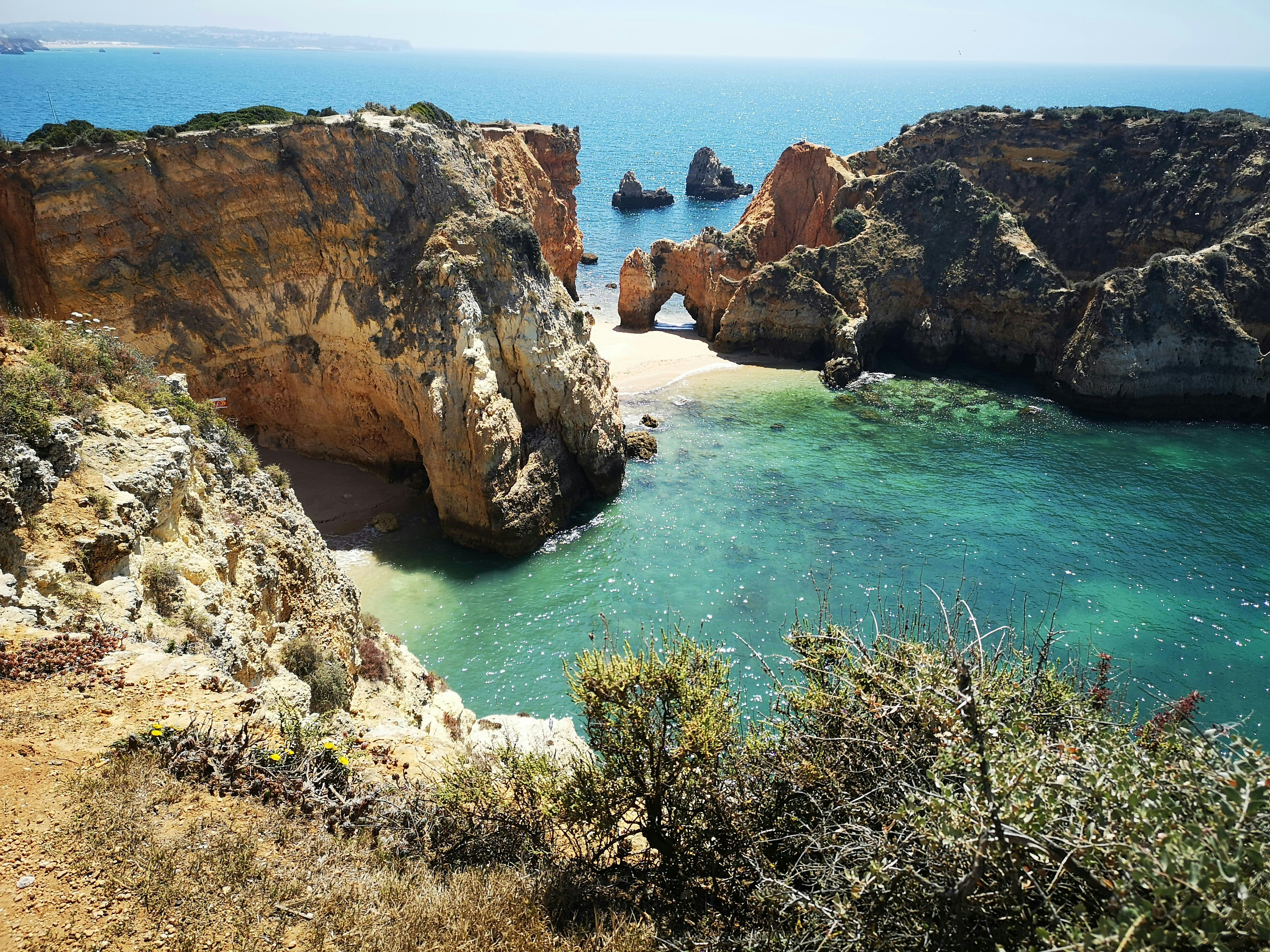
The Seven Hanging Valleys Trail follows the clifftops of the central Algarve between Praia da Marinha and Praia de Vale Centeanes, passing limestone arches, hidden coves, sea caves and tiny beaches far below.
It is one of Portugal’s best-known coastal walks, and understandably so. The colours alone are remarkable: honey-coloured limestone, deep Atlantic blue and the green of Mediterranean vegetation clinging improbably to the cliffs.
The secret is timing.
Walk early in the morning, particularly outside the height of summer, when the light is softer and the coastline is quieter. Rather than rushing to complete the entire trail, we prefer treating it as part of a slower Algarve day — a beautiful walk followed by a leisurely lunch overlooking the sea.
Best for: Dramatic scenery and first-time visitors to the Algarve
Allow: Around 3–4 hours for the full route
When to go: Spring and autumn are particularly beautiful
Ponta da Piedade
Lagos, Algarve
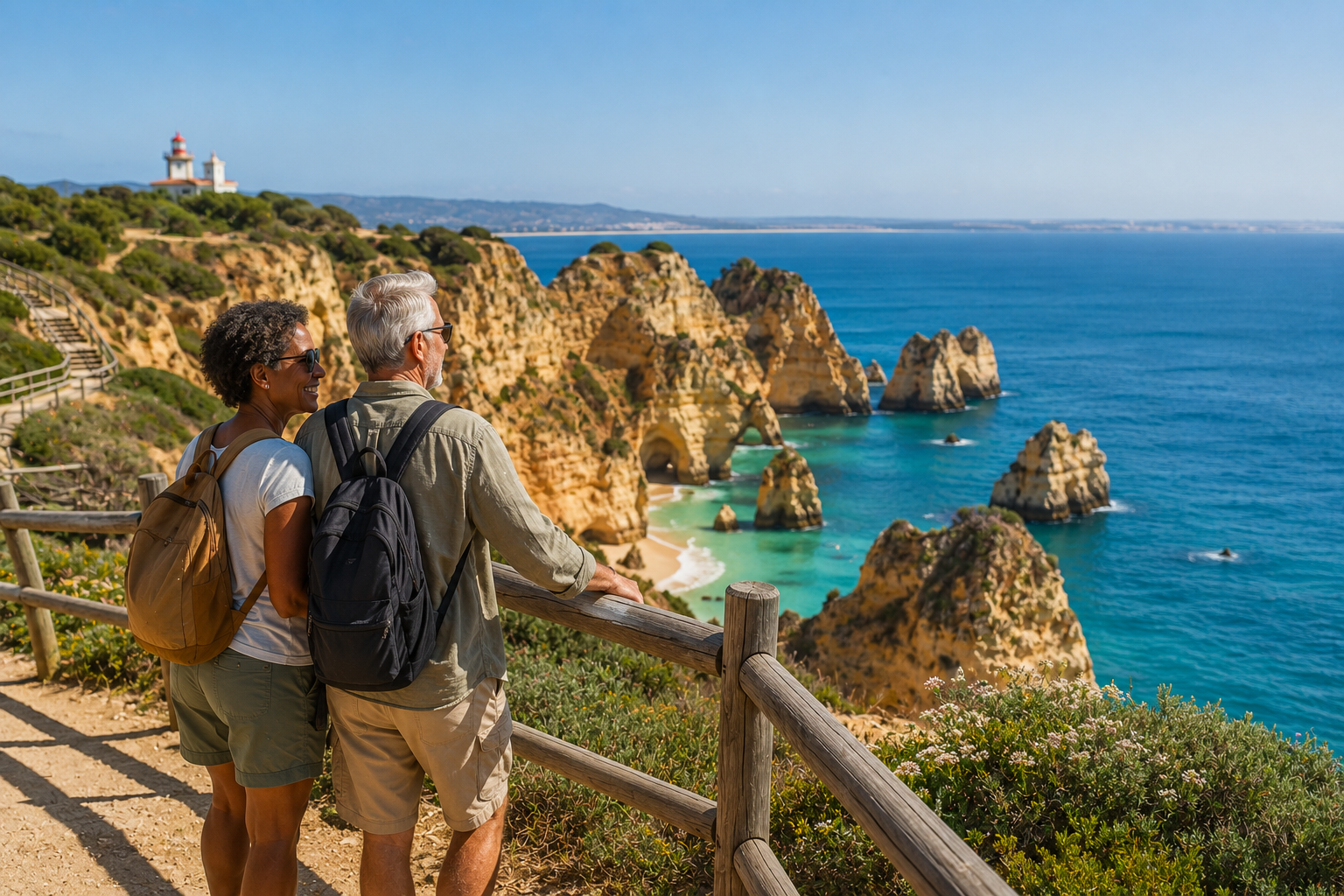
Just outside Lagos, the Atlantic has carved the sandstone cliffs of Ponta da Piedade into an extraordinary landscape of arches, pillars and grottoes.
The clifftop paths here offer one of the Algarve’s most accessible introductions to coastal walking. Wooden boardwalks and trails lead towards viewpoints over impossibly clear water, with small fishing boats appearing almost miniature beneath the cliffs.
This is not a walk that needs to be hurried.
Go in the morning before the day becomes busy, or towards evening when the cliffs turn golden. Afterwards, return to Lagos for lunch or continue west towards the quieter beaches and villages beyond the city.
For a different perspective, the coastline can also be explored from the water by private boat.
Best for: An easy scenic walk paired with time in Lagos
Allow: 1–2 hours
When to go: Almost year-round, avoiding the hottest part of summer days
Cabo de São Vicente
Western Algarve
At Portugal’s southwestern edge, the landscape changes.
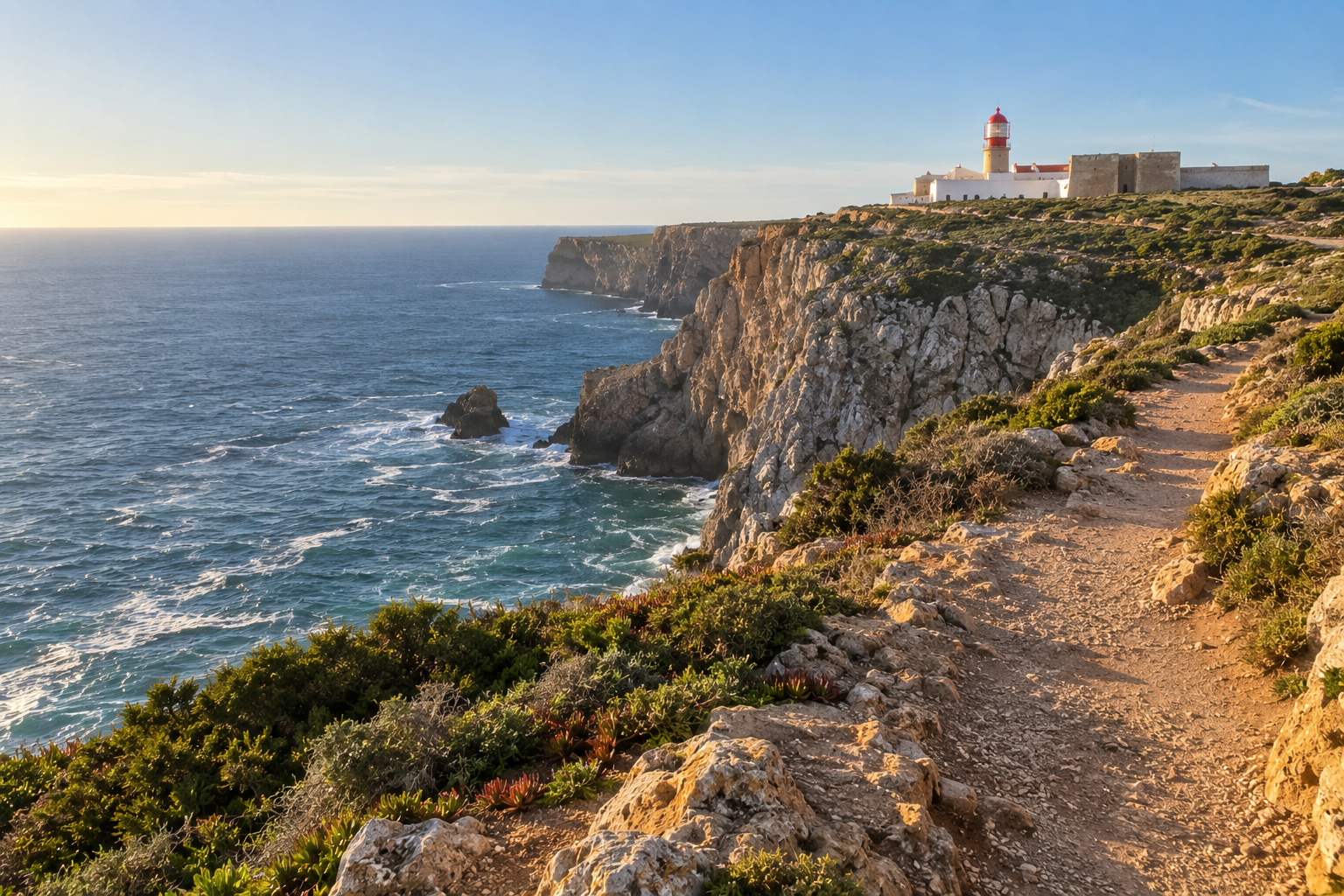
The sheltered coves and resort towns of the central Algarve give way to enormous skies, windswept headlands and Atlantic waves breaking against dark cliffs.
Walking around Cabo de São Vicente and the surrounding Costa Vicentina feels wonderfully elemental. There are fewer distractions here. The landscape is bigger, emptier and more exposed.
For centuries, sailors approaching or leaving Europe passed this coastline. Standing here today, with nothing but ocean stretching towards the horizon, it is easy to understand why this corner of Portugal accumulated so many stories about explorers, storms and the edge of the known world.
Rather than simply driving to the lighthouse, spend time walking a section of the surrounding coast.
Best for: Wild landscapes and a sense of remoteness
Allow: 2–4 hours depending on the chosen section
When to go: Spring and autumn; expect wind at any time of year
The Fishermen’s Trail
Alentejo & Costa Vicentina
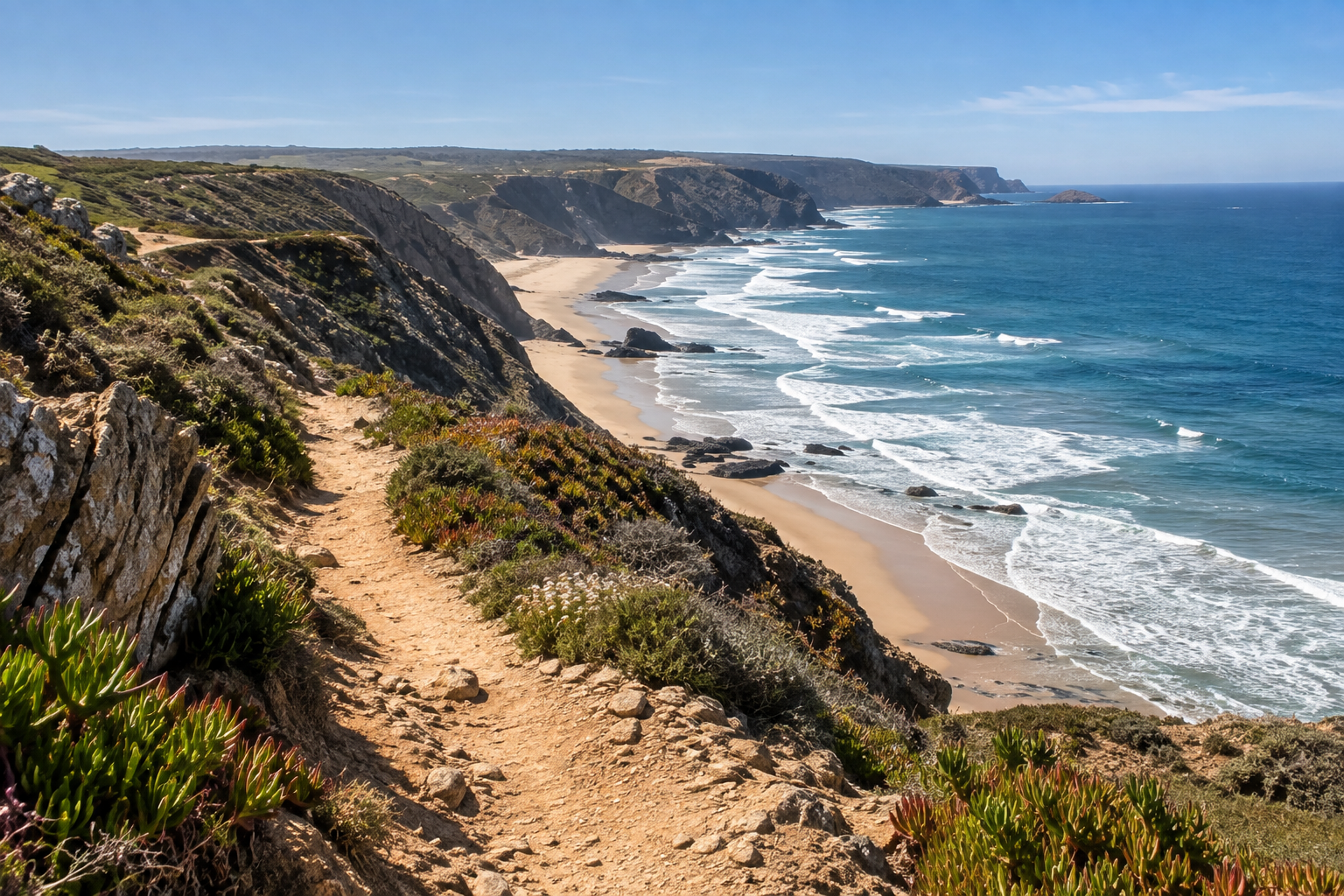
If one trail captures Portugal’s wild Atlantic coast, it may be this one.
The Fishermen’s Trail forms part of the Rota Vicentina and follows paths traditionally used by local fishermen along the Alentejo and Vicentina coastline.
At times the route runs directly above the ocean. At others it crosses dunes, sandy tracks and seemingly endless stretches of untouched coastline.
The landscape is magnificent, but what makes this region special is the feeling of space.
Small towns such as Porto Covo, Vila Nova de Milfontes and Zambujeira do Mar punctuate the route, creating opportunities to walk selected sections rather than tackling the trail as a conventional multi-day hike.
This is how we particularly like experiencing it: choose a beautiful section in the morning, walk for several hours and finish somewhere with grilled fish, chilled white wine and a table overlooking the Atlantic.
Best for: Travellers who want Portugal at its wildest
Allow: From a half-day to a multi-day journey
When to go: March to May and September to November
Cabo da Roca to Praia da Ursa
Sintra Coast
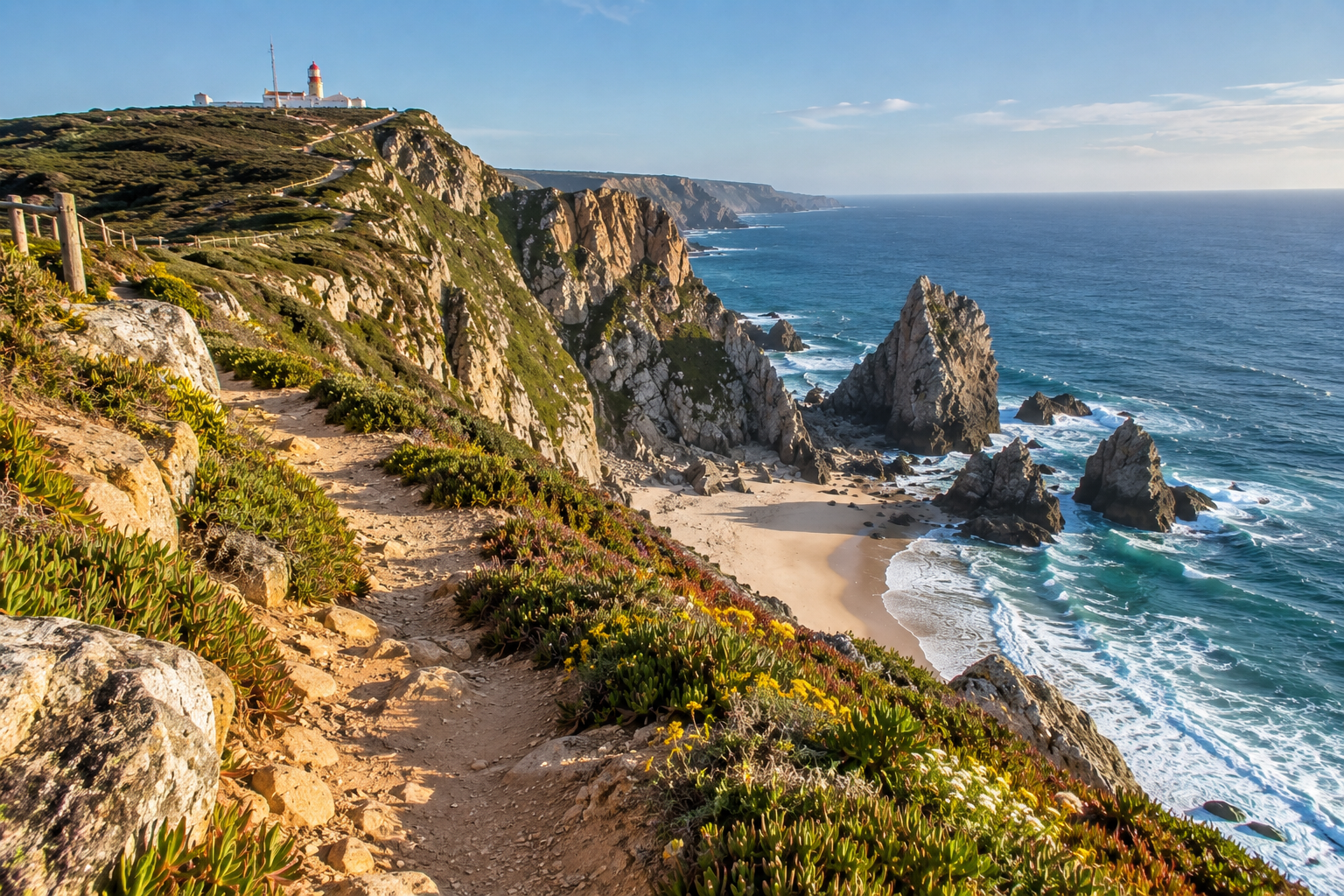
Cabo da Roca has an irresistible geographical claim: this is the westernmost point of continental Europe.
But the real magic begins when you leave the crowds around the monument behind.
The surrounding Sintra-Cascais Natural Park is a landscape of cliffs, Atlantic forest, hidden beaches and remarkably rugged coastline. One of its most striking sights is Praia da Ursa, where enormous rock formations rise from the sea beneath the cliffs.
The trails in this area can be steep and conditions vary, so this is one walk where local guidance can make the experience both safer and considerably richer.
Combine it with the quieter side of Sintra rather than trying to squeeze it between palace visits. This coastline deserves its own time.
Best for: Adventurous walkers staying in Lisbon or Sintra
Allow: 2–3 hours depending on the route
When to go: Spring and autumn, or cooler summer mornings
São Lourenço to Cais do Sardinha
Madeira
Madeira’s landscapes make even seasoned travellers stop in their tracks.
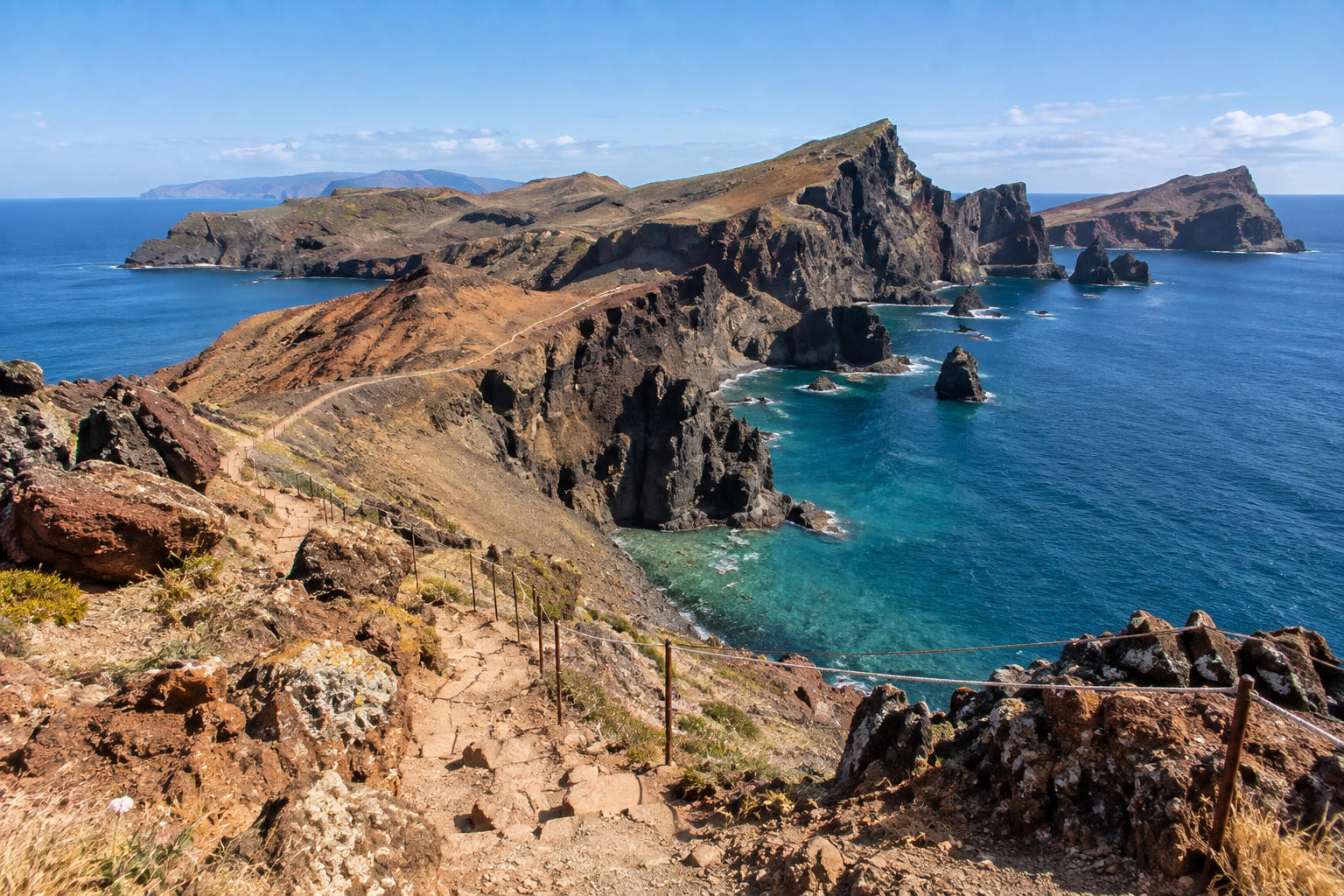
On the eastern tip of the island, the Ponta de São Lourenço peninsula feels completely different from Madeira’s lush interior. The landscape is volcanic and almost treeless, with rust-red cliffs dropping into intensely blue water.
The PR8 trail towards Cais do Sardinha follows the peninsula through a succession of viewpoints across both the north and south coasts.
On clear days, the light and colour are extraordinary.
The route is exposed, however, with very little shade, so an early start is essential during warmer months. Carry water and sun protection and allow time simply to stop and look.
Best for: Volcanic landscapes and panoramic Atlantic views
Allow: Around 3–4 hours
When to go: Year-round, subject to weather and trail conditions
Sete Cidades
São Miguel, Azores
Not every coastal walk follows the shoreline.
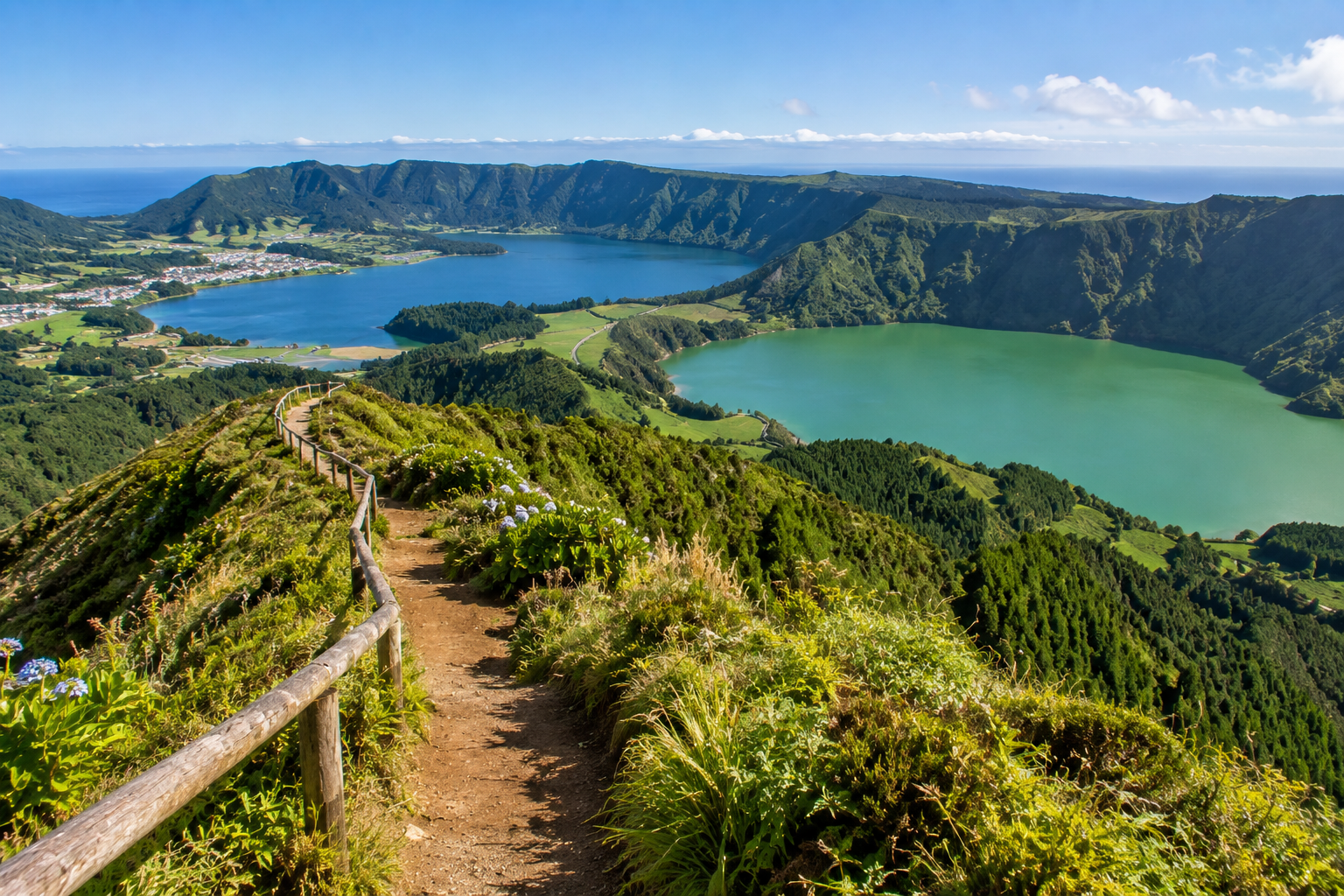
On São Miguel, some of the island’s most extraordinary walking takes place high above the Atlantic, where volcanic ridges separate enormous crater lakes from the ocean.
Around Sete Cidades, trails follow sections of the caldera rim with views towards the famous blue and green lakes on one side and the Atlantic on the other.
Clouds move quickly here, revealing and concealing the landscape within minutes. When they clear, the scale of the scenery can be astonishing.
It is a reminder that in the Azores, the ocean is never merely a backdrop. It shaped the islands themselves.
Best for: Big landscapes and photography
Allow: 2–4 hours depending on the route
When to go: Spring through autumn, with flexibility for weather